
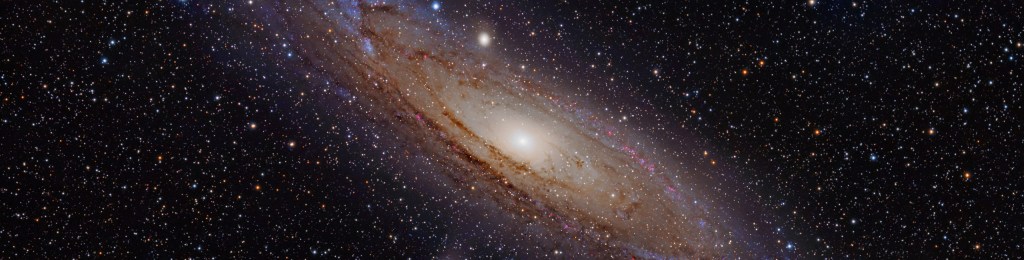
If the galaxy is so large, why haven’t we heard from other intelligent life? With new exoplanets being discovered seemingly daily (4065 so far), why haven’t we heard from ET? This is the so-called Fermi Paradox.
Let’s take a step back and consider the time scale on which the galaxy operates. The big bang was 13.7 billion years ago. Between 2.75 and 2.8 million years ago, the first of genus homo made its appearance on Earth. Homo Sapiens first walked the Earth around 300,000 years ago. The first exo-planets outside our solar system were discovered in 1988. The internet was first available to the public on Aug. 6, 1991, a mere 28 years ago.
Consider the productivity and trade gains produced by that invention: no GPS, no smartphones, the snail-paced spread of research breakthroughs, difficulties in political communication, among many.
I highly suggest you read this article from the Atlantic. A panel of 12 “scientists, entrepreneurs, engineers, historians of technology” assembled a list of the 50 most important inventions since the wheel; with the internet listed at number nine, behind the printing press, electricity, penicillin, semiconductors, optical lenses, paper, the internal combustion engine, and vaccination, in that order.
Life’s Search for Us
The Kardashev scale proposes that the amount of energy a civilization utilizes is directly dependent on how advanced that civilization is. We are a Type 1 civlization, unable to even utilize the entirety of the energy on our own planet. Type 2 civilizations can utilize the amount of energy contained in the local planetary system. Type 3 civilization controls entire galaxies worth of energy.
Science Fiction writer Arthur C. Clark proposed the following rules when developing his theories on how the future will look.
- When a distinguished but elderly scientist states that something is possible, he is almost certainly right. When he states that something is impossible, he is very probably wrong.
- The only way of discovering the limits of the possible is to venture a little way past them into the impossible.
- Any sufficiently advanced technology is indistinguishable from magic.
I’d like to focus on that last one. What would a 16th century Londoner think of the internet, or electricity (power grids developed in the 1870’s), let alone Type 3 Civilizations.
These galaxy controlling civilzations would appear no different to us than magic.
The Sumerians developed cuneiform writing in 3200 BC. Tell them about (nearly) instant communication across thousands of miles (diameter of Earth: 7219 mi) and they’ll call you either a visionary or a nut-job. If you gave them the technology, it would be indistinguishable from magic.
If an extraterrestrial civilization were to approach Earth using methods unknown to us, we would call it magic even with our current understanding of the physics of the universe (think: trying to send a text to a caveman). Perhaps other civilizations have tried to contact us in the past but due to lack of technological prowess, the message slipped through the cracks of history.
Our Seach for Life
The first planet orbiting a star outside our solar system was discovered in 1988, about 30 years ago. That means homo sapiens have spent 99.99% of our time on Earth ignorant of other potentially habitable planets outside of our immediate solar neighborhood. What an incredible time to be alive!
In 1974, Earth sent off a radio transmission toward M13, a star cluster 21,000 light years away. Considering radio waves travel at the speed of light through space, it’ll take 21,000 years before the message even reaches the star cluster, let alone responds.
In conclusion, it makes perfect sense that we haven’t discovered extraterrestrial intelligent life beyond Earth, but the immense complexity of the universe and the extremely rapid development of technology makes the discovery of life beyond Earth inevitable.
Gravity
Einstein’s Theory of General Relativity holds that time is the fourth dimension. Space and Time are the same thing. Matter and energy are essentially the same thing. Matter is stored energy. This means gravity affects energy and light.
Gravity controls time through the dilation of energy and light.
When you break apart a proton and neutron, you get energy. Lots of it. Fission is what powers nuclear power stations and nuclear bombs.
When you are a Type 3 Civilization, you can control time. Matter is light is energy is gravity. Using energy, you can manipulate space time. Our local gravity stays pretty much the same, but by warping the space around us, we could become older or younger than our surroundings, relatively speaking.
The particle accellerator in geneva shoots tubes of hydrogen gas at each other and catches the explosions with 8,000 times per second. They’re designing a fusion reactor in southern france. LOOK at this thing.

Let’s Get Philosophical
There are many theories on why we haven’t discovered ET life. For example, if intelligent life was to exist on a planet with 10 times Earth’s mass, the planet would have an “escape velocity 2.4 times greater than Earth’s — and overcoming that pull could make rocket launches and space travel near impossible.”
Another theory states that some civilizations are destined to be too successful in population and consumption, leading to their own demise (see: climate change, inflation). Seeking other hospitable bodies implies scarcity of resources; as resources become scarce, prices rise and exploring other celestial bodies for resources becomes economically viable, which leads me to the next hypothesis.
Borrowing from Socrates’ Apology, perhaps other intelligent life has decided against capitalism:
When my sons grow up, punish them… if they seem to you to care for money or something else before virtue… reproach them just as I did you, that they do not care for what one ought, and they think they are worth something when they are worth nothing.
Perhaps all intelligent societies that haven’t destroyed themselves have come to the conclusion they shouldn’t seek other intelligent life based on a sense of morality or virtue. Perhaps they found an ideal Standard of Ethics, as Plato’s Euthyphro posits:
I believe you held there is one ideal form by which unholy things are all unholy and by which all holy things are holy. Do you remember that? …. Well then, show me what, precisely, this ideal is, so that, with my eye on it, and using it as a standard, I can say that any action done by you or anybody else is holy if it resembles this ideal, or, if it does not, can deny that it is holy.
Perhaps seeking extraterrestrial intelligent life is precisely “unholy” and we just haven’t realized it yet.
Another particularly compelling explanation is the simulation hypothesis. With believers like Elon Musk, the theory states that we do not live in base reality. Think of it as virtual reality (see: Ready Player One or the Matrix); if we were unable to distinguish between reality and simulation, who’s to say the simulation isn’t reality?
Alas, the search continues.
Thanks for reading. Really enjoyed this one,
/tommander-in-chief
Further Reading:
- https://www.jpl.nasa.gov/news/news.php?feature=6991
- The Three Body Problem, Liu Cixin
- Nikolai Kardashev & the Race Against Dark Energy
- https://www.aispacefactory.com/
- Plato’s Euthyphro with comments
- Picture: Andromeda Galaxy (2.5 million light years away)
 fungible thoughts
Leave a comment