
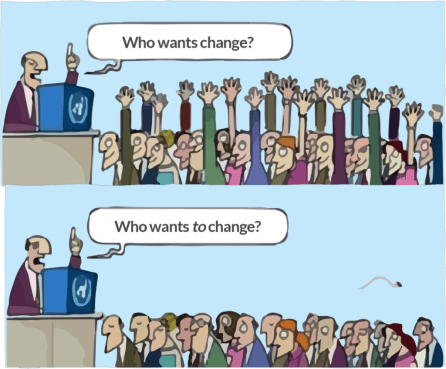
What changes do you want to see in the world and what are you doing to achieve them? Control what you can, to see the change you want to see.
The following is an introduction to optimization and an exercise in re-framing how we each see our world. I challenge you to be intentional with your time and resources. I challenge you to optimize your lives to be the change you want to see in the world.
What is Optimization?
Change variables X and Y, such that Z is maximized.
Optimization is a process by which problems are solved; changing inputs to achieve an optimal output. Optimization is a statistics problem that applies at the individual molecule level just as much as at the global level.
By tweaking the inputs, one can hope to achieve the most desired result. Given enough inputs and the ability to change those inputs at will, one can most certainly find the most desirable result with a given level of certainty.
Finding the Optimal Result
Reverse engineering is a process where we observe or measure what an object or process is optimizing for in order to determine its purpose or function. Whether we are conscious of it or not, we are always doing this. We are always trying to figure out what the purpose of a process, person, or thing is in our lives.
“All men by nature desire to know.” – Aristotle
We use trial and error to eliminate and refine our conjectures of purpose. This, itself, is an optimization process. We desire to know because it was an evolutionary advantage to understand the purpose of things around us to build better and better tools and pass on our DNA to the next generation.
Predicting the Future
It’s a fun thought experiment to imagine the most extreme consequences of allowing an AI, who has complete control of all the levers, to be in charge of an optimization problem. We’re feeding the machine today with data we think is important to solve the problems of the future. With further processing power, data identification, and fixing methods (see neural networks), we’ll be better equipt to see connections between variables. By changing X, how are Y and Z affected?
Our biological narrative bias allows us to assign a story to why something is the way that it is by dropping events we see as irrelevant. We prefer the simplest explanation as it requires the least amount of energy (again, an optimization problem). When there are more variables, it becomes harder for humans to comprehend without augmentation. “What happens when I pull this lever?” becomes a much larger question with the help of AI.
An AI with a massive amount of processing power and data feedback has the ability to see the effects the Trump tariffs are having and are likely to have in the future through simulation analysis, for example. There’s an average outcome of any given situation, but as it plays out, people make decisions that the model needs to adapt for. If the model (or AI) were to assign probabilities to every single minute possibility then adapt these inputs as events played out, we could effectively predict the future.
In finance, we call this Monte Carlo analysis. Monte Carlo analysis gives you a probabilistically-weighted path dependent result. What happened in t+1 affects what happens in t+2, just like real life.
Determining the Goal of AI Optimization
The world can be seen as an optimization problem, but the main topic of discussion is what should we optimize for? When we give the hypothetical AI control of the levers, we better be pretty damn sure of our definition of what the machine is going to optimize for or we may well end up being optimized out of the equation, as Nick Bostrom outlines in his TedTalk. Bostrom is a Swedish philosopher working for Oxford. I highly recommend watching/reading his stuff when you get a chance. He’s got a book out called Superintelligence: Paths, Dangers, Strategies in which he goes over the goal of AI and why it’s important to at least start the conversation.
Finance magnate and founder of Blackstone Group, Stephen Schwarzman, recently donated $188M to Oxford to develop a department for the ethics of Artificial Intelligence.
Platonian Optimization
What is optimized in the arts? Music, philosophy, painting, etc. In the Republic, Plato defines our life goal as the pursuit of excellence. Excellence he defined through his four cardinal virtues, Wisdom, Justice, Fortitude, and Temperance (Sauce).
Plato is quoted, “Wisdom alone is the science of other sciences.” To have wisdom is to have knowledge, to acquire knowledge is to find the purpose of things. Finding purpose requires trial and error which means the acquisition of knowledge is an optimization problem.
From Uplift, “Justice is the ability to be fair, to respect the rights of others and give them their due.” Pursuing justice is an optimization problem maximizing fairness and/or minimizing conflict.
Fortitude is the ability to be steadfast in the face of difficulty. The ability to be resolute in your beliefs is directly derived from having credible, sensible sources with which to support your beliefs. Fortitude is found through gathering data about your world and your place in it. Fortitude is the emotional input driving your search for wisdom.
Temperance is the ability to moderate across all aspects of our lives. If thought about from an optimization standpoint, this is our min/max setting for the weighted average solver. For example, when trying to decide whether to invest in Stock A, B, or C, we need data. If we choose price return, we will end up 100% invested in the stock that has the highest return, unless we further specify. We need to tell our optimization machine that diversification is desirable otherwise we end up with all our eggs in one basket.
From a personal finance standpoint, we want to invest across asset classes to avoid losing everything if one of our assets falls sharply in value. We want to maximize our ability to meet our future spending needs by setting an appropriate minimum and maximum weighting for each asset class.
In modern capitalism, corporations seek to maximize profits subject to societal and cultural constraints like personal and environmental well-being. If these corporations push their populace to far, they’ll face strikes or rioting. There are checks and balances in the system. Temperance is the variable in Plato’s equation designed to minimize rioting, so to speak.
In effect, Plato’s definition of Excellence is an optimization problem. We alter our time spent in pursuit of each of the four cardinal virtues with the goal of maximizing excellence.
Optimization in Religion
While reading Richard Dawkins’ River out of Eden, I was reintroduced to the idea of optimization in nature. The basis of his theory is “if there is a divine creator with a master plan, what is he optimizing for?”
I won’t spend too much time here, as Dawkins does a much better job than I ever could but the basis is this: gazelles are designed to outrun cheetahs and cheetahs are designed to kill gazelles. Both are optimized to survive, so where’s the optimization in all this? It takes an enormous amount of energy from both parties; one can argue it’s not a very efficient system.
What’s God playing at? What’s the problem (s)he is optimizing?
Dawkin’s conjecture is that DNA is in charge. DNA doesn’t care about the individual, only continuing its process towards perfection. The process by which DNA is transferred between generations is competitive, thus only the strong (or clever, or…) survive long enough to reproduce. All DNA is in competition, so by simply outperforming other DNA by optimizing the individual through natural selection, the best DNA survives.
This means only the best DNA can hope to remain in the gene pool over the long term. Evolution is itself solves the optimization problem with DNA as the facilitator pulling the levers.
Our world is built on optimization.
TL;DR I’d like to challenge you to see your world as an optimization problem. First, what changes do you want to see in society? Next, define the variables you have control over. Third, optimize those variables to achieve the change you want to see.
Thanks for reading,
/tommander-in-chief
 fungible thoughts
Leave a comment