If you want to launch a revolution, don’t ask yourself how many people support my idea. Instead ask yourself how many of my supporters are capable of effective collaboration. – Yurval Noah Harai, Homo Deus
Cooperation
History as our teacher, societies that form social bonds and have learned to cooperate more efficiently than others have been more successful than their less organized counterparts. Similar to how the human eye did not appear but evolved over time into what it is today, ideas do not form out of a vacuum.
This is an exercise in how nothing in our world forms from thin air. Everything that exists today is so because of events occurring at an earlier date; see: contingency. We study history to see why things are. We study history to learn from our past in order to better understand and predict the future.
The Shifting Overton Window
The Overton Window is a concept in political science describing what is acceptable in the context of political discourse. This window shifts over time, seen obviously through the lens of history. From Cannibalism to slavery to Naziism to divorce and marriage, these are all prime examples of how humans have shifted this window to what we now perceive as acceptable. When we live to be over 150 years old, will we still have the same ideas about marriage?
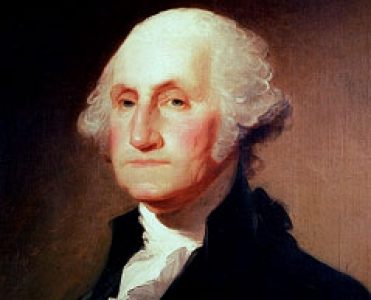
We can condemn the founding fathers of the United States as racists and hypocrites for writing “all men are created equal” while holding slaves themselves, but in the context of the Overton Window, these men are excused.
It was absurd for Trump to suggest the purchase of Greenland from Denmark. Suppose he lets the media cool off for a few years, and during his second term, he again suggests the purchase with data to back up his offer.
The second offer seems a little less absurd.
How fast this window shifts is a function of how well societies work together and communicate, i.e. how fast entire cultures change their collective mind.
Velocity of History
Paradoxically, the better we understand the past the faster history moves. I’m currently reading Solaris for the first time. In this futuristic fictitious world, we have discovered and populated new solar systems with human life, yet our protagonist “unrolls” a paper map of the surrounding area. Written in 1961, author Stanislaw Lem was unable to predict the coming of digitalization. How could we possibly navigate the stars today without using software? Even the Apollo missions had onboard computers with analog screens. As a side note, the onboard Apollo 11 computer had just 4KB of RAM, that’s 0.000004 GB of computing power. In contrast, the base model of a Samsung S10 has 6GB of RAM or 6,000,000KB. The phone in your pocket has 1.5 million times the computing power of the Apollo 11 mission’s onboard computer, yet in Lam’s novel the main character was still using paper maps to get a lay of the land.
The faster technology progresses, the more data we have available at our fingertips. The more data we have, the more we know. The more we know, the faster history progresses. The faster history progresses, the less able we are to predict the future.
How can one predict how advances in quantum computing will affect our knowledge and application of biological sciences or pharmaceuticals? How will advances in nano-technology affect how our children are taught in schools? How will brain implants designed to help Alzheimer’s patients affect spacecraft guidance systems?
Homo Sapiens has built this incredible interdependent socio-economic system because of our ability to cooperate better than any other species that has ever lived on Earth. No single human has the ability to hit the brakes on economic growth or scientific discovery, to borrow Yuri Harari’s analogy, because no one knows where the brakes are.
Massive Bodies of Change
Our current economic system based on world trade is seriously affecting our planet.
…our activity has reduced the biomass of wild marine and terrestrial mammals by six times and the biomass of plant matter by half…
Humans account for about 36 percent of the biomass of all mammals. Domesticated livestock, mostly cows and pigs, account for 60 percent, and wild mammals for only 4 percent.
Source: Ecowatch.com
Today, the biomass of humans (≈0.06 Gt C; SI Appendix, Table S9) and the biomass of livestock (≈0.1 Gt C, dominated by cattle and pigs; SI Appendix, Table S10) far surpass that of wild mammals, which has a mass of ≈0.007 Gt C….
In fact, humans and livestock outweigh all vertebrates combined, with the exception of fish.
* Gt C = Gigatons of Carbon
Source: PNAS.org
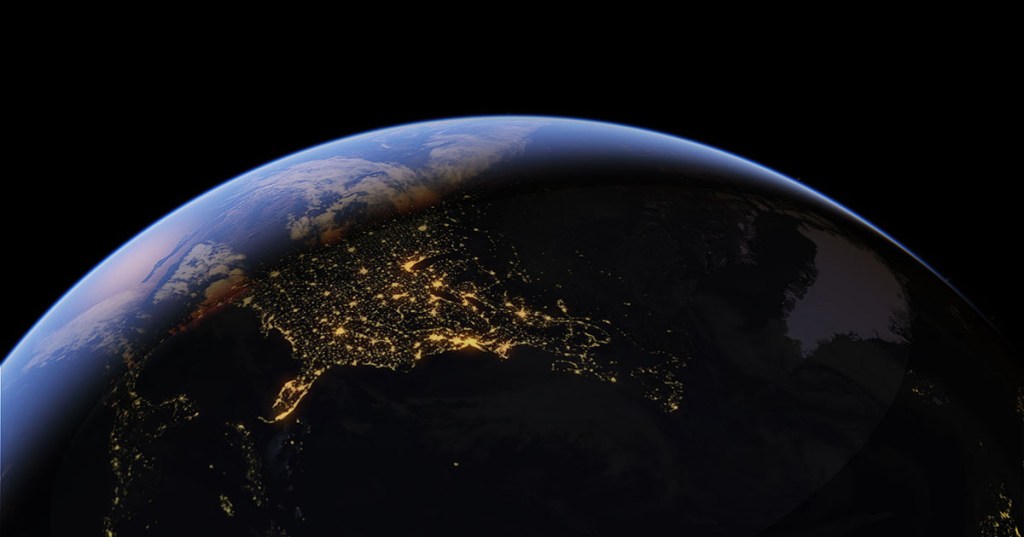
This is a result of our incredible ability to coexist and interact on a massive scale. We are literally changing the dynamics of an entire planet through sheer desire.
Commentary of Evolution
As we continue to bend the entire Earth to our will it is important to keep in mind that extinctions are a way of life.
The tree of life is not a continual process leading toward perfection as evidenced by the five massive extinction events of the last 600 million years. The tree of life has branches that stopped growing, died out due to extraneous circumstances; chaos, if you will. Contrary to common thought, evolution is not a linear process toward perfection. It has leaps and setbacks that brought us to where we are today. Ninety-six percent of all life was wiped from the face of the Earth 251 million years ago at the end of the Permian era.
[There was] a cataclysmic eruption near Siberia blasted CO2 into the atmosphere. Methanogenic bacteria responded by belching out methane, a potent greenhouse gas. Global temperatures surged while oceans acidified and stagnated, belching poisonous hydrogen sulfide. “It set life back 300 million years,” says Schmidt. Rocks after this period record no coral reefs or coal deposits.
Source: CosmosMagazine.com
What we perceive as a never-ending conquest for perfection is, in all likelihood, a delicate blend of lady-luck and survival of the fittest. For further reading, see Wonderful Life by Stephen Jay Gould.
Three-Body Problem
In the context of evolution and prediction, the Three-Body Problem comes to mind. This is an iconic problem in physics revolving (pun intended) around how massive objects interact in 3D space. Only under certain initial conditions can we predict the orbits of each of the three bodies within an acceptable degree of certainty. There exists no closed-form analytical solution to this problem using algebraic and integral formulas.
In the n-body problem, there exists n bodies interacting, each having a mass and velocity vector. We cannot, to this day, predict how the bodies will interact over time without some assumptions and simplification of the variables.
Every day, economists and market participants attempt to predict where financial instrument prices will go given their expectations. There are massive amounts of data being manipulated and analyzed in the pursuit of profit. Ecologists, geologists, and meteorologists attempt this problem with respect to living populations, natural phenomena, and the weather. The incredible amount of chaotic behavior in these systems makes in nigh impossible for these fields to make accurate predictions.
Defining a Polymath
Attempting to form a concise list of all the factors needed to predict the evolution of life and ideas is difficult, but I’ll give it a shot here.
- Space-Time
- Gravity
- Distance
- Motion
- Astronomy
- Geology
- Plate Tectonics
- Carbon Cycle
- Biology
- Food Chains
- Botany
- Atmospheric Dynamics
- Water Cycle
- Fluid Dynamics
- Pressure and Motion of/through different states of matter
- Chemical Reactions
- Enzymes, Proteins, Sugars, Fats, etc.
- Technology
- Growth of Knowledge Base
- Spread of ideas
- Magnetism, Electricity, and Light
- Electric Currents
- Wavelength Spectrum applications and uses
- Evolution of Human Sciences
- Political Science
- Philosophy
- Religion
- Economics
- Psychology
Yet, Darwin formed his theory of evolution without an understanding of the underlying biochemical reactions required by life. We can still form theories about how things work without incorporating all the variables. These are called Effective Field Theories. In economics, we claim ceterius paribus. It means all else held constant. The theory holds if nothing else in the system interacts with our variables, which in the real world is complete BS.
With the growing base of data and nearly instantaneous sharing of knowledge across massive boundaries, we’re sure to develop more precise models for predicting the future. But lo, the more knowledge we have of the past, the faster history changes. Humans may be destined to never solve the n-body problem and may forever be stuck in the never-ending pursuit of knowledge and happiness.
Thanks for reading. I hope this was thought-provoking; as always, feel free to write me at fungiblethoughts@gmail.com.
/tommander-in-chief
Bonus Material
The main driver for life as we know is it the pursuit of dopamine, which makes us “feel good”. Every animal has a dopamine (or octopamine in the case of arthropods) response system.
Mammalian studies have revealed interconnected neurobiological systems for reward learning, reward assessment, reinforcement and reward-seeking; all involving the biogenic amine dopamine. The neurobiology of reward-seeking behavioral systems is less well understood in invertebrates, but in many diverse invertebrate groups, reward learning and responses to food rewards also involve dopamine. The obvious exceptions are the arthropods in which the chemically related biogenic amine octopamine has a greater effect on reward learning and reinforcement than dopamine.
Source: NCBI
 fungible thoughts
Leave a comment