I’ve been reading quite a bit about nature, physics, geology, philosophy and anthropological history over the past several years. Authors include Karl Popper, Hannah Arendt, Richard Feynman, Sir John Glubb, Max Tegmark, William Cronon, Will Stefen, Johan Rockström, Wade Davis, Immanuel Kant, Friedrich Nietzsche, and Joseph Campbell.
The reason for my inquiry is to form a holistic theory of how one should live their life; according to which principles proposed by our predecessors we should chose to govern our minds and bodies, both individually and systemically.
In the first chapter of his The Open Society and its Enemies Karl Popper warns of the inefficacy and potentially destructive nature of this type of thinking; one should never seek to govern the natural forces that ebb and flow with the rise and fall of human achievement, he warns. Growing up an Austrian Jew around the emergence of Nazism, he was greatly concerned with those ideals which seek to govern a population’s ability to think and act independently.
It is an important distinction that I do not seek a law which governs, but rather a process by which the governing of the individual can take place; where absolutes are scarce and philosophies are challenged. By design, this piece is but an installment in a series of entreaties into the realm of self-discovery.
Aristotle distinguished the three ways of life which men might choose in freedom, that is, in full independence of necessities of life and the relationships they originated….
… the life of enjoying bodily pleasures in which the beautiful, as it is given, is consumed; the life devoted to matters of the polls, in which excellence produces beautiful deeds; and the life of the philosopher devoted to inquiry into, and contemplation of, things eternal, whose everlasting beauty can neither be brought about through the producing interference of man nor be changed through his consumption of them.
– Hannah Arendt, The Human Condition
To surmise, a life where activities are undertaken for pleasure, a life where activities are undertaken for the greater good, and a life of contemplation. Below follows my attempt at the last (and most difficult, I would argue) of the three. A list, though not comprehensive, of the foundational knowledge upon which I base my behavior.
We should be curious until a concept is understood. Einstein is quoted, “if you cannot explain it to a six year old, you do not really understand it.”
Curiosity demands that we ask questions, that we try to put things together and try to understand this multitude of aspects as perhaps resulting from the action of a relatively small number of elemental things and forces acting in an infinite variety of combinations…
In this way we try gradually to analyze all things, to put together things which at first sight look different, with the hope that we may be able to reduce the number of different things and thereby understand them better.
– Richard Feynman, The Feynman Lectures on Physics, Volume 1
We should think about one another; action and reaction. What is good for me may not be for my neighbor. With the advent of social media it is becoming easier to sympathize with someone on the other side of the planet. Emotion breeds action, but too much emotion-inducing information can lead to ambiguity and stagnation. This is one of the great problems of the information age. How do we balance being constantly bombarded by information and manage to maintain a positive outlook?
We should seek to maintain our individuality in an age where everyone seems to have their own facts. In recent years, the word fact has lost its dictionary meaning in colloquial usage. Notifications rule our attention. The war being fought by Big Tech is for our attention. Attention is currency and success is measured in Daily Active Users. Realizing that our time is a commodity that can be marketed and profited from is important. It makes us as mere individuals have some form of control over the capitalistic system. Think critically and be intentional with technology.
On Evolutionary Biology:
It is comfortable and easy to be a conformist. Intense intellectual inquiry takes energy and humility. Our entire evolutionary history has been a struggle for good enough. Our biological functions will push us towards the path of least resistance; i.e. the most successful result using the least amount of energy. Our brains tell us to seek the greatest reward for the least amount of work.
Homo sapiens is the most powerful species ever to live on planet Earth because of our ability to form more and more complex societies. Our complacence with the way things are and our inability to change them is inherent to the survival of the species. Society is an engine of progress. The glue that holds the system together is often religious or economic, as explored by Yuval Noah Harari in Sapiens. When vital parts of the system are questioned (the central deity figure(s) or the value of the common currency), the engine of progress begins to break down.
In the ninth century… in the age of Mamun, the Arabs measured the circumference of the earth with remarkable accuracy. Seven centuries were to pass before Western Europe discovered that the world was not flat. Less than fifty years after the amazing scientific discoveries under Mamun, the Arab Empire collapsed.
In the Arabic empire of the 9th century, an obsession with personal wealth and property led to stagnant affluence.
… at the height of vice and frivolity the seeds of religious revival are quietly sown. After, perhaps, several generations of suffering, the impoverished nation has been purged of its selfishness and its love of money, religion regains its sway and a new era sets in.
– Sir John Glubb, The Fate of Empires and Search for Survival
A religious resurgence (recall nothing happens in a vacuum) caused the downfall of a predominately scientific welfare state with free public hospitals and universities. Note, a utopian concept of a welfare state may not be entirely desirable and may just be another step toward an empire’s inevitable collapse.
I digress, nothing is inevitable. Events transpire because institutions comprised of free thinking individuals acting in their best interest make them so. Those who perceive an event as inevitable will work to ensure their prophecies are acted upon.
The prophets who announce that certain events are bound to happen make propaganda for them, and help to bring them about.
– Karl Popper, The Open Society and its Enemies, pg. 4
Progress is not linear. We should view the progress of humanity as a pendulum and a game of chutes and ladders. It takes a series of extreme reactions in order for an idea to become stable and positive.
On Mathematics and Reality:
Max Tegmark’s Our Mathematical Universe outlines how the universe can be described on the basis of mathematics. Everything we experience can be deduced to an equation. Among his most controversial and compelling theories is the emerging theory of multiple universes. He says the reception of this theory has gone from “This doesn’t make sense and I hate it” to “I hate it”. It’s a well-known reaction to scientific advancements; Galileo Galilei’s writings on heliocentrism (the idea that the earth revolves around the sun) were condemned by the church on the grounds that he was attempting to reinterpret the Bible; he was put on house arrest and his writings banned from public eye until centuries later.
An experiment. Imagine you are 4 meters from the door and you can only travel half way to the door at a time. So at the beginning of the exercise you are 4 meters away, after one movement you are 2 meters, then 1 meter, then a half meter and so on. The thinking goes, how long can you continue to travel half the distance before the space between you and the door becomes so small that your movement becomes imperceptible. How long until space can no longer be divided?
Once you get down to these tiny distances, you cannot know with enough certainty whether you are beyond the door or in front of it. Position becomes a probability function rather than a precise location. “I can say with 95% certainty that I am X distance from the door”, one might say. This is due to tiny, tiny things like electrons behaving both like particles and like waves. An electron can be in many different places, all with different associated probabilities. As soon as an electron’s position is known or measured, the probability function “collapses”, in physic speak, to one position. The probability of the electron occupying other positions collapses to zero, while it’s measured position jumps to one.
According to one theory proposed by Princeton graduate student Hugh Everett III in 1957, the electron actually inhabits all positions proposed by the probability function. The ones that we did not measure are evidence of multiple universes.
Greek philosopher Democritus hypothesized back around 400 BC that there existed some smallest quanta of matter known as an atom which could not, by definition, be divided. Since, we have discovered the atom, which is made of protons, neutrons and electrons. Today, we know about quarks and other particles which make up protons and neutrons. Yet matter is not infinitely divisible.
Our universe is governed by 18 to 22 physical constants (range is dependent on your definition of derivations), which cannot change. The Planck Constant is one such finite value discovered in classical physics describing the value of a single quanta of energy, effectively proving that energy is not infinitely divisible.
Tweaking any of these constants by just a few percent can have a remarkable effect on our universe.
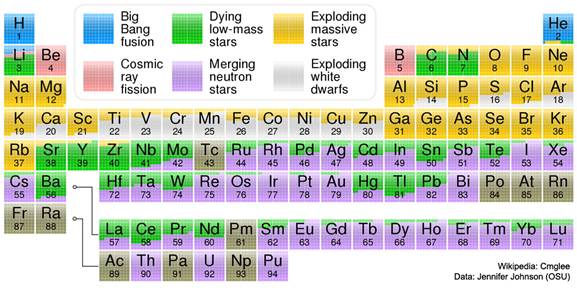
Moments after the big bang, the universe was so hot that only hydrogen plasma existed. As the universe expanded, pressure was reduced leading to lower temperatures. Small perturbations in the uniformity of the plasma caused pockets of mass to begin attracting more mass due to the law of gravity (formally discovered by Sir Isaac Newton in 1687). As the universe continued to expand and mass attracted mass, stars began to form, the plasma began to interact in what we now describe as fusion. At the end of a star’s evolution, an explosion known as a supernova occurs creating the heavier elements present in our universe; gold, plutonium, etc. The processes of gravity takes over once again and planets are formed. Thus is the nature of OUR universe.
What if the big bang had contained too much energy, thus expanding too fast for gravity do its thing? What if it had expanded too slow, and thus collapsed upon itself? What if different laws of physics governed our universe? Thus is the nature of theoretical physics.
I do not claim competence in these subjects. Yet in the absence of a religion, my search for meaning has led me along this path of inquiry. Physics seems to be the most eloquent and coherent method of understanding our place amongst the cosmos.
Religion and morality can also be manifest through our sensual interactions with the natural world; sensual here meaning with the senses. Mathematics are eloquent ways to say something simple. Observing, touching, smelling, and tasting are more concrete, direct ways to find meaning.
On Economics and Nature:
We are currently experiencing the Sixth Mass Extinction event. Global biological diversity is plummeting. Several species, such as cows and pigs, are becoming behemoths in terms of global biomass due to human influence.
…our activity has reduced the biomass of wild marine and terrestrial mammals by six times and the biomass of plant matter by half… Humans account for about 36 percent of the biomass of all mammals. Domesticated livestock, mostly cows and pigs, account for 60 percent, and wild mammals for only 4 percent.
– Yinon M. Bar-On, Rob Phillips & Rob Milo, The biomass distribution on Earth
We are world makers and world breakers. No longer can we claim ignorance because no longer are we hunters, gathers, or nomads.
Those of us who enjoy clean air, a hike through the woods, and the swoop and chirping of birds on a crisp fall morning should be worried about the general downfall of wilderness. I point to William Cronon to outline the moral dilemma of consuming wilderness:
This, then, is the central paradox: wilderness embodies a dualistic vision in which the human is entirely outside the natural. If we allow ourselves to believe that nature, to be true, must also be wild, then our very presence in nature represents its fall. The place where we are is the place where nature is not. If this is so—if by definition wilderness leaves no place for human beings, save perhaps as contemplative sojourners enjoying their leisurely reverie in God’s natural cathedral—then also by definition it can offer no solution to the environmental and other problems that confront us. To the extent that we celebrate wilderness as the measure with which we judge civilization, we reproduce the dualism that sets humanity and nature at opposite poles. We thereby leave ourselves little hope of discovering what an ethical, sustainable, honorable human place in nature might actually look like.
Wilderness cannot exist where we do, yet we cannot stop the economic machine. One of the greatest challenges we, as a species, face morally and economically is finding a balance between consumption and sustainability. We cannot continue to consume as we have, yet we have no system that has pulled more societies out of poverty than capitalism. Capitalism requires growth in perpetuity and our resources are finite. Some point to the cosmos for a solution, just as our religious forefathers did, but our interest is profit rather than prophesy. The heavens are no longer where God calls us upon death, but a frontier to be exploited like the United States West in the 16th and 17th century.
Capitalism will continue to exist in some form or another. As long as individuals seek the best terms upon which to transact, markets will have a purpose. Using markets for a higher purpose is what the future calls for. In my entrepreneurial endeavors, a circular economy will be central and (hopefully) the answer to overconsumption. Markets 2.0 will require morality in place of the swashbuckling, cut-throat images which remind us of early mercantilism and colonialization.
There is an open outcry for “evil” corporations to take a political and moral stand against cronyism. Investors are paying attention. This gives me hope for the future. Incorporating this into your financial habits and consumption principles is paramount to your and your children’s future. The problem will not go away because of political popularity. We’re cowardly deferring the problem to future generations.
On Language and Love:
We seek answers from philosophers Ludwig Wittgenstein and Friedrich Nietzsche about the evolution of the mind and language. Wittgenstein argues there is no such thing as a perfectly logical language. There exists today no language where our words can be fully understood. We cannot know what another person means when they speak in ambiguous terminology such as, “I love truth”. To the listener, “I” and “love” and “truth” may have completely different meanings than what the speaker intended.
As another example, a spartanly outfitted apartment. Spartanly to some means the residents are going without some necessary decoration, appliances, or furniture. To others it brings about images of Thoreauvian simplicity and wholeness.
Similarly, Nietzsche’s idea of the Superman is completely separate from the DC universe’s “faster than a speeding bullet, stronger than a freight train, etc.” It is of a man who is perfect intellectually. Man is to monkey, as Superman is to man. Evolution of the mind is not done. We are not perfect products, we have just been good enough to survive and prosper using our superior ability to collaborate, pool resources and grow the overall pie. See: Egoistic Altruism.
What will this Superman look like, able to speak a perfectly logical language? The more we read, the more resources we gather; resources that can be used toward expressing ourselves more completely.
“The noblest pleasure is the joy of understanding”
– Leonardo Di Vinci
It follows that to allow others to more completely understand, we must seek perfection in our ability to be understood, thus becoming a more pleasurable person with which to interact.
Birth and Death: Beginnings and Ends
I’ve been operating under the assumption that Sagan’s (and his predecessors’) theories of evolutionary biology were the primary driving force behind human history. The main argument proposed in Sagan’s works is that the survival of the species, thus the proliferation of the genetic material, is the primary purpose of any activity that an individual, population, or species performs. When we analyze the behavior of populations or individuals, we can point to an evolutionary reason as to why that behavior is performed. Conservation of energy is a key reason why we choose the easier task even when choosing the more complex option would lead to a more rewarding outcome.
Humans possess the ability to break this evolutionary tendency through our ability to perceive a future in which outcomes have played out, optimizing for the greatest payout. Delayed gratification goes against evolution, thus we use our brains to overcome evolution’s tendencies toward immediate reward. We weigh our options, then make a decision based on available information. Even in the face of overwhelming evidence against the immediate pay-off, humans are well known to choose the less advantageous option when our biochemistry contradicts logic. Smoking cigarettes, for example, is awful for our long term health but they feel good and none of this matters anyway; so what the hell, one more pack.
Evolutionary biology is one reason why biological life behaves the way it does, rather than the only reason. While I continue to believe that life is primarily driven by genetic material’s desire to replicate, I’ve recently begun studying the dialogue promoting religion as the primary driver of the history of human decision-making.
Whether you eat the spinach or the cookie can be explained through evolution but how we moved from a segregated species of small populations of hunt-gatherers to a complex interplanetary species can, I believe, be answered through religion.
From 300.000 years ago until about 40.000 years ago we were primarily a hunter gatherer society. Our ideas about the world cannot be known in prehistory, but they can be guessed at through archeology, psychology, and anthropology.
Thought experiment:
Say you’re transported 40.000 years in the past with no knowledge of the modern sciences. Birth, healing, death, and the natural world would be mysteries, with ebbs and flows beyond your understanding. Here I’ll define the natural world as being all things perceived in our reality that we cannot control. The weather, growth of plants, celestial bodies, etc. We begin to construct stories about why things are the way they are. If the story is adequate in explaining a certain phenomenon, we share that story amongst our society; we may even try to communicate these stories through pictures and writing. When we can’t draw a concept, we require a symbol to communicate an idea. A spiral or arrow signifying the passing of time, for example. An “X” signifying a barrier, or that something is forbidden.
In order for a religion to succeed and spread, we identify three key characteristics:
- Grandeur – The religion must be sufficiently vast so as to incorporate concepts not yet contemplated.
- Completeness – Everything that has been contemplated must be encapsulated within the religious teachings.
- Unity – The religion must include both a beginning and an end to satisfy our obsessions and questions surrounding birth and death.
These stories, which comprise a religion fitting the above formulae, form the foundation of a legal system, establishing, for example, a respect for the ecosystem on which the hunter gatherer society draws its sustenance. When we over-hunt, populations collapse. This respect is learned through the trial and errors of prior generations, which is slowly transmuted into a system of law through religious belief. As the story of respect for an ecosystem spreads, more individuals are incorporated into the legal system, establishing codes of conduct for larger populations of individuals. Similar logic applies to murder, incest, theft, etc.
In our awe of the natural world, we seek patterns in trying to perfect our stories about why or how things are, creating a scientific cycle of hypothesis and testing. We study the stars, notice patterns, and derive divine meaning from their paths across the night sky. We test the boundaries of our religious teachings and establish discourse, thus establishing political sciences and a venue in which to redact prior beliefs and enact new policies.
In early history, we established religious centers around the positions of the stars, allowing us to navigate to specific locations across populations. These locations become meeting places to establish relations with neighboring populations, sharing stories, goods, and genes.
These locations eventually become populated by perceived divine individuals who have the vision (social manipulation) or creativity (curiosity) to create increasingly compelling stories about why the world is and how society should be. We see the value in keeping these divine individuals alive by feeding them even though they do not hunt, thus establishing permanence of location.
This breeds the need to create more food as a religion’s followers grow and more of the local ecosystem is consumed. Thus, we move from a hunter-gather society to agricultural.
The above thoughts are the beginning of an idea, rather than an airtight explanation of history. I’ll continue my studies and update this document as needed. (2025-07-25)
Watch this: https://www.youtube.com/watch?v=SDZ454K_lBY
Thanks for reading.
/Tommander-in-Chief


 fungible thoughts
Leave a comment