

President Trump tweeted the following on Nov 6, 2012:
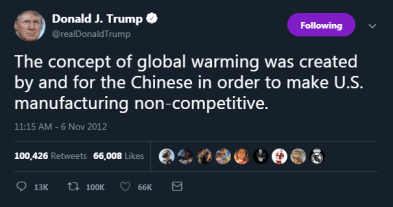
US manufacturing is not competitive even without regard to climate change! It’s common economic sense.
Chinese production costs are lower than the United States. Chinese manufacturing yearly wages amounted to $9,207 in 2017.
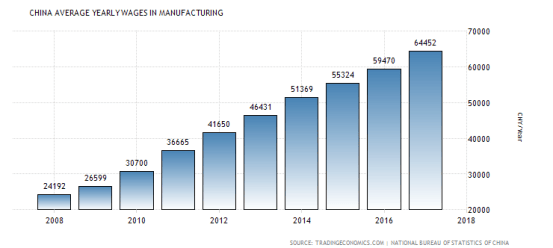
The Federal Reserve Bank of Saint Louis Economic Research division estimates the average hourly wage of a manufacturing employee in the United States is $27.11. The American worker would have to work just 42 eight hour work days to surpass their Chinese counterpart. It’s no wonder China is smoking us in production. It makes business sense, if not common sense, to export production to China.
Back to the climate change issue:
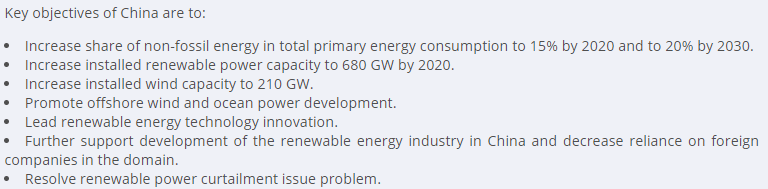
It’s not like China is sleeping on their limited supply of fossil fuels. They have ambitious plans to expand non-fossil fuel programs in the next 15 years.
China 13th Renewable Energy Development Five Year Plan:
China produces and consumes massive amounts of solar inputs. According to Forbes, China accounted for about 50% of global solar demand in 2017.
That being said, China has a problem getting their solar parks on the grid. It might make sense for them economically to slow down investment in solar.
“Over 70% of China’s large-scale wind and solar projects have been installed in the resource-rich northern regions featuring low electricity demand and low export capacity.” Moreover, China’s “lack of transmission lines to export electricity from the renewable energy mega-bases has been the major cause of renewables curtailment.” Curtailment is stranded power that is generated but cannot get into the grid. BNEF says China’s renewable power generators “face the worst curtailment rates in the world, with the national average curtailment ratio in 2016 at 17% for wind and 10% for solar.”
…On May 31, China’s National Development and Reform Commission (NDRC), Ministry of Finance and National Energy Board issued a statement halting all subsidies for utility-scale solar projects in favor of competitive bidding, and greatly reducing feed-in-tariffs. This move is likely to effectively slash demand in the world’s largest solar market by about 40%. (Forbes)
As Chinese subsidies fall and demand falls in parallel, many companies will be forced to burn cash with the expectation that oil prices will outpace rising costs in the future, or go out of business. With the drop in suppliers, technological innovation slows and we’re back to burning more fossil fuels for longer. With the recent rise in oil prices, new refineries will start popping up.
Examples of Implications:
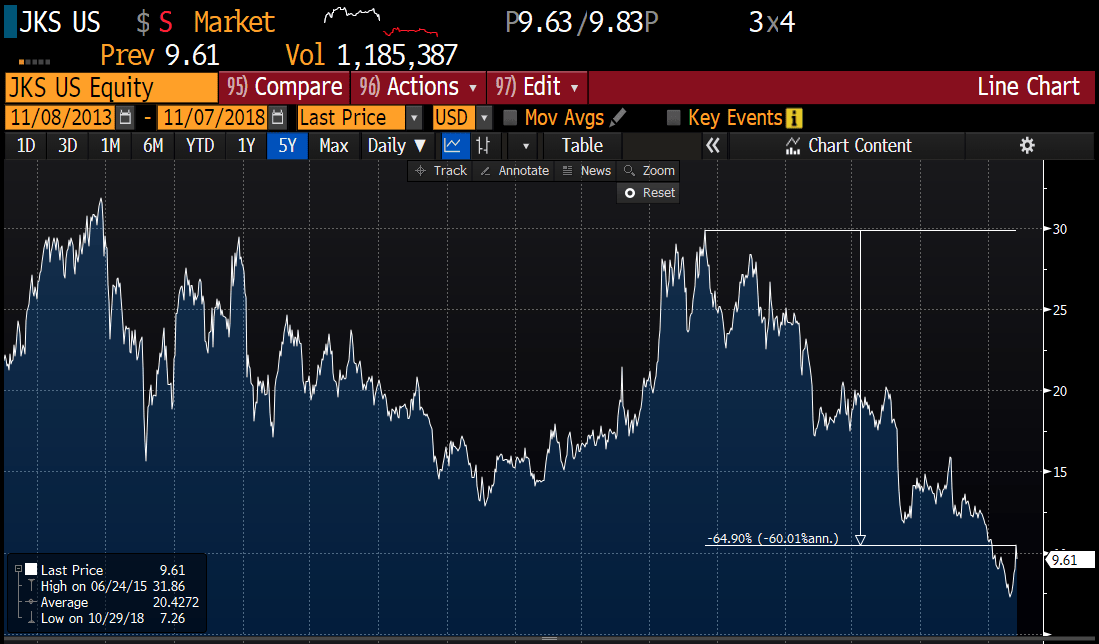
US Solar producers rely on China as purchasers of their technology and products. JinkoSolar (Ticker: JKS) attributes 40% of their revenues to China.
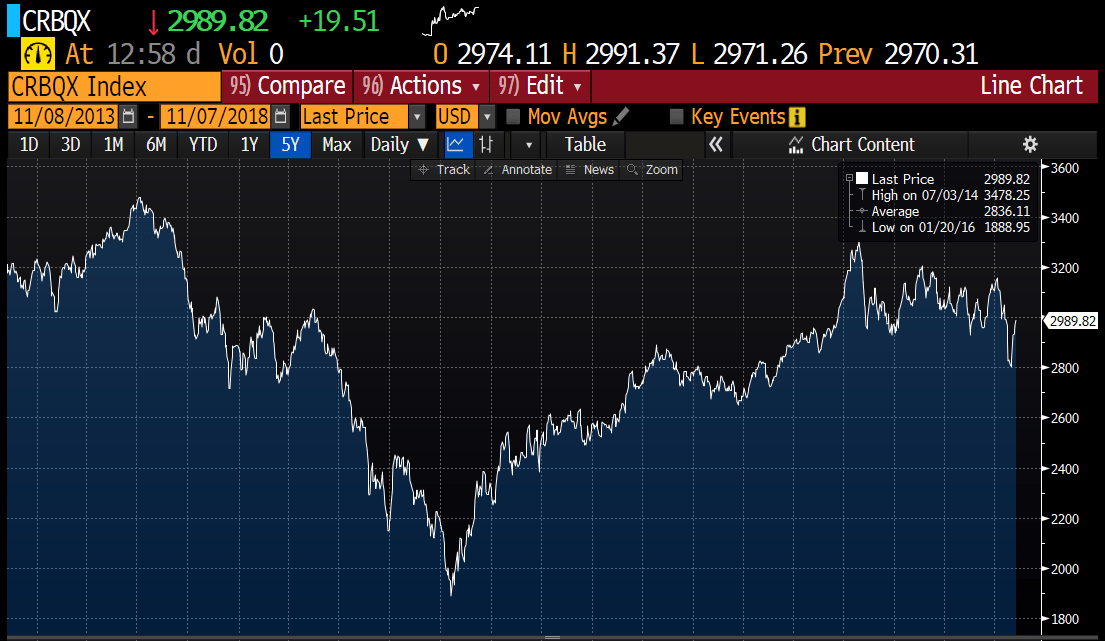
They have easily extractable alternatives that are quickly becoming cheaper to produce and more profitable to export. CRBQX is an ETF tracking companies with revenues tied to commodities: Barrick Gold, John Deere, Exxon Mobil, etc. Since the commodities rout in 2015, we’ve seen a rise in this composite of 58% or nearly 18% annually.
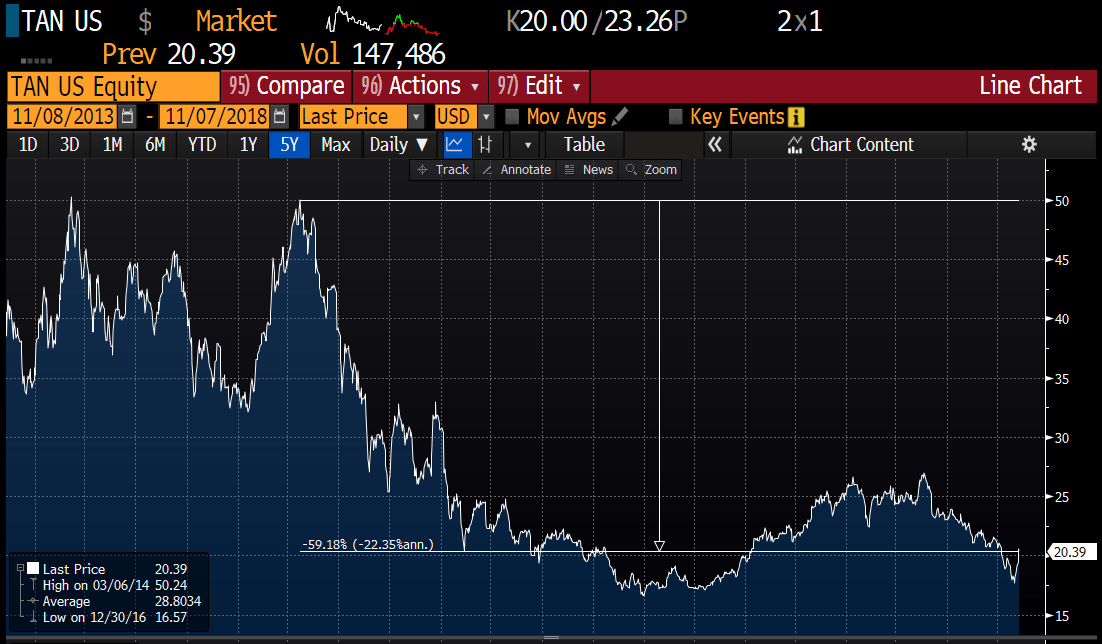
TAN is an ETF tracking companies with revenues tied to solar production: Xinyi Solar (Chinese), First Solar (FSLR), Sunrun (RUN), Solar Edge (SEDG), etc. This composite has fallen nearly 60% since 2015 highs, or over 22% annually.
China recognizes the need to produce non-fossil fuel energy.
They’ve overproduced/consumed solar inputs and now they need to solve distribution problems. It doesn’t make sense economically for China to combat climate change. It doesn’t make sense economically for the US to combat climate change because we lose more and more production capacity to the Chinese: basic game theory.
Both economies should focus on what they are good at. United States domiciled companies should focus on Research and Development of refining renewable energy techniques to make them profitable endeavors. The Chinese should focus on getting their clean energy on the grid to reduce coal and oil emissions. They have the capacity, they just need to begin to distribute and access it.
Investment positioning going forward:
Invest in energy companies like Exxon and BP if you can swallow it. Remove exposure to consumer cyclicals: entertainment, tech, housing, retail as oil prices continue to rise. Reduce airline exposure. At the very least, get your money out of solar for the time being. The alternatives industry looks like it will have a year or two of pain as they recover from a supply glut. Perhaps look to other alternative sources like ethanol. Republican victories in the corn belt should strengthen or at least preserve ethanol subsidies through 2019.
Thanks for reading,
/Tommander-in-chief
Disclaimer: Consult your financial advisor before acting on opinions outlined in this article. Opinions are my own and do not reflect on my employer.
 fungible thoughts
Leave a comment