
A prior post outlined a structure, formally called SCRUM, which helps organizations achieve the best results. The process is completely dependent on how teams are formed within the project. The mix of individuals ultimately determines success or failure. People run companies. No matter how dynamic your development process is, without the right people, the company is destined to fail.
The goal of SCRUM is speed and flexibility. Before we can implement the process, however, a team must be chosen.
Collective Intelligence
If the goal is to solve a given problem in the best way in the shortest amount of time, what factors should an organization look for in choosing a group of people best suited to the task?
In other words, what should you look for in individuals in order to create the best possible group?
In order to gather a successful group, we need to define success. What’s desirable is a high degree of collective intelligence, with intelligence defined as the ability to achieve a desirable outcome across a wide variety of tasks. From Encyclopedia Brittanica, “intelligence is the ability to adapt effectively to the environment.”
Relating this idea to your organization, wouldn’t you want to work with a team that is dynamic? You want your company to be agile and respond to market conditions. You want to be able to tweak and optimize your product or service to fit the prevailing market conditions in order to earn more revenue at less cost.
This is where collective intelligence comes in. Different people get together and cultures are naturally formed. In some, ideas are shared organically and information is spread across the organization in an effective manner. This is the type of structure we want to create.
How Humans Organize
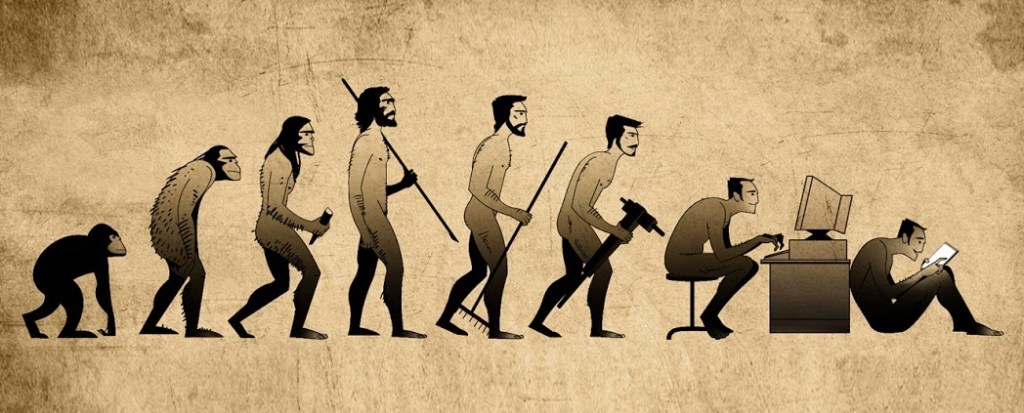
Let’s take a step back. The first humans weren’t able to establish trust outside of their genetic pool. They existed in small societies mostly limited to close family. They were scavengers and nomads. They were prey, not predators.
Over time we developed methods where different societies could communicate and trade; things like language, money, and religion formed. In Yuval Noah Harari’s Homo Sapiens, he calls these stories or myths. In Naval Ravikant’s words, “we’re storytelling monkies”. We figured out that we could create systems of trust by spreading stories.
We began the process of domesticating animals and plants and thus the transition from a nomad society to an agrarian society. We developed principles for personal property and with it a set of laws and a group to enforce those laws. We began building bigger and bigger systems of trust, and thus bigger and bigger societies.
Economies and religions formed. We could trade with each other more easily with a standardized currency exchange market. We could more accurately understand one another’s morals by knowing their religion.
Networks
Think of these stories as facilitators of networks. To quote Ravikant, “The problem with networks is how to do you organize them, how do you run them, how do you decide who’s in charge?”
One answer is a centralized authority i.e. the guy with the biggest stick tells everyone what to do. The problem with this system is it requires one individual to know all and see all.
Another is an aristocracy, where the few rule the many because they’re experts (journalists, Congress, medical associations, large corporations). Organizations like this abound today, yet most are slow moving and politically driven.
Another is a democracy, where the people decide what gets done. The problem with democracy is that some sections of the governed population are more informed than others on decisions being made, i.e. democracy isn’t merit-based. One voice, one vote; someone working as a mechanic may not be the best person to vote on a bill regarding regulation of financial authorities.
The internet started as a democracy, where everyone had a say. But there were no merit-based systems in place to organize this massive amount of information created by humans to share with other humans. Wikipedia and Google were berthed after several failed attempts (…what happened to Ask Jeeves?). They’re our best systems for creating a merit-based democracy.
When you interact with Google’s search engine, you’re interacting with the massive amount of information humans have created to share with other humans. Sometimes the results are spot on; someone has already created the information you are seeking. Other times, the results require some level of learning, maybe what you need is in a different language or notation than you’re used to. Still other times, the information is completely misleading or designed to disinform. Google’s engine isn’t a curator, just a connector (note: up for a debate on this point).
Google’s search engine results are returned on a merit-based system. If it’s relevant, it’ll show up but the most read results come first. They optimize the results to achieve the fastest, most accurate result.
Real Life Application
Imagine an organization based on a merit-based democracy. Everyone has a voice but only the best ideas and information are disseminated within the organization. Using each individual’s intelligence, relevant information is sourced and screened; then the best information is shared within the network. The network begins to establish a collective intelligence.
On a macro level, a society’s collective intelligence can be measured using social variables such as length of life, quality of life, crime rates, and literacy rates. It can also be measured in economic metrics such as gross domestic product per capita or unemployment rate. The goal is to produce such a high level of collective intelligence, that the variables mentioned above are organically optimized.
At the company level, the goal is the same, but with different objectives: optimize company performance through optimization of collective intelligence.

So how do we get there?
To recap, similar to how people have differing levels of intelligence, groups have an associated intelligence. Groups think as a unit to solve a problem. How does one optimize the group to get the best possible result?
The classic response would be, find the most intelligent people and put them in a room and you’ll get a desirable outcome. It turns out, according to Thomas Malone’s Superminds, “the average and maximum intelligence of the group members was correlated with the group’s collective intelligence, but this correlation was only moderately strong.” Gathering a group of highly intelligent people doesn’t guarantee high collective intelligence.
Further, Malone’s team found the following to be true regarding human group dynamics.
The collective intelligence is most affected by:
the individual intelligence of the group members,
the ability of the group members to work well with others (as measured by social perceptiveness) and,
the cognitive diversity of the group members.
Superminds, Malone
At Thinktank, we will attempt to create a mind map of our network using tests for cognitive intelligence and social intelligence. We stack a person’s self-described traits on top of these tests to create sufficiently diverse groups (age, expertise, etc) that will attempt to take a concept from A to Z.
Thinktank consists of high performing, curious individuals by design. We’re less interested in establishing individual intelligence than we are creating the best situations for our thinkers to interact.
Implementation
A thought experiment: gather a group of people from diverse backgrounds and get them each to describe Stockholm, Sweden. An architect will give you what he knows about the history of architecture around Stockholm. An artist will tell you background on the city’s cultural side. A financier will provide what he knows about the trading community. Any one person will have a hard time constructing a holistic picture of Stockholm. If you ask them to, they’ll use the resources available to them to source information about things they don’t know. Imagine if you put all these people together in a room with the goal of describing Stockholm.
One person designates herself as the scribe, or project leader, deciding what is added and what is omitted. The project leader rarely contributes but adds color to what is contributed by the group. Others contribute based on what they know. The strength isn’t in the individual expertise but in the group’s diversity and curiosity.
Thomas Malone (Supermind) calls this process industrialized writing. There’s a company called CrowdForge that does this specifically for website and game development. Our scope would be broad and specific to the expertise of the network. The ideas we attempt to take to market by optimizing collective intelligence will be decided based on the interests and expertise of the network.
Next step: Mapping Thinktank.
More to come. Thoughts? Always happy to talk: fungiblethoughts@gmail.com
Thanks for reading,
/tommander-in-chief
Sauces:
- Superminds, Thomas Malone.
- Sapiens: A Brief History of Mankind, Yurval Noah Harari
- https://www.nytimes.com/2015/05/25/science/explaining-a-cornerstone-of-game-theory-john-nashs-equilibrium.html
- https://crowdforge.io/about
Quick Quote:
“Society advances one funeral at a time”
Quick thoughts:
The average guess of a group of people predicting the number of marbles in a jar is much more accurate than any one individual’s prediction given a random selection process.
Blockchain dictates that no single individual has power over the network. One can only achieve a decision if the majority has collective control of the network.
There’s a popular scene in the film based on John Nash’s life, A Beautiful Mind. In this particular scene, he and his four buddies are working out how they can all get laid. Across the bar, there are five women; one of the women is particularly striking. They think on the basis of Adam Smith: “Every man for themselves”.
Nash, on the other hand, works through each of the possibilities. If they all go for the striking woman, she’ll be overwhelmed and will choose no one. Then if the men try to go for her friends, they’ll leave because “no one likes to be the second choice.” If they instead go for everyone but the blonde, everyone wins.
The best possible result is achieved when the individual takes into account individual and collective needs.
 fungible thoughts
Leave a comment