
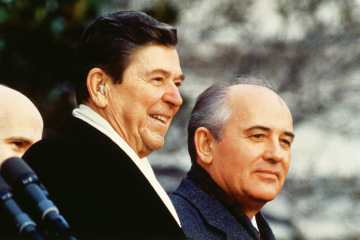
There’s a famous story of a Russian diplomat in the Cold War era who visited an American city. In Russia, bread lines were a daily occurrence. People waiting in line (not working and producing) for bread and food stuffs. When the diplomat visited the American city and saw there was bread on every shelf, he asked to see the man in charge of bread distribution. He was very impressed with whoever was in charge. Obviously, there was none. The system was democratized.
Capitalism requires a democratization of resources and choices. We all get to vote where bread will be distributed. Suppliers get to choose where their resources would be best distributed. They choose those locations because they provide the best profit or because they have a prior relationship with the seller.
Supply chains are decided by profits and relationships in America; the decision making process is done through open market transactions. The decision making process is democratized and it’s the best system we (humanity) has come up with to date to handle the distribution of resources.
What’s the catch? Why isn’t the world a utopia?
The greatest fallacy in financial markets is that in times of distress money is pulled from areas most in need of financing.
Imagine a situation that has occurred in Venezuela, Argentina and Zimbabwe other countries over the past decade (not to mention Weimar Germany in the 1920’s). Government borrowing becomes too large, so the government tries to print its way out of the debacle. Creating money from nothing leads to problems, big problems. It leads to rampant inflation and devaluation of local currency.
Acting as fiduciaries to clients, money managers no longer lend to companies in those countries, as their investment would be literally wiped out in days due to inflationary conditions. Thus, investment in that country is inadvisable if not downright irresponsible.
When there is an earthquake or natural disaster in any country, state or geographic area, business comes to a halt. Companies can no longer generate revenues because all focus has been turned toward the crisis. Food and water become scarce and prices start to rise.
In the event of a crisis whether man-made or an act of God, business suffers. Investments are lost and physical capital is damaged. Cross border capital dries up and the country enters a viscous feedback loop of no investment, no transactions, no goods, bankruptcies, bad reputation, falling credit scores, falling investment, no transactions, no goods, and so on.

Night is always darkest before the dawn.
Imagine a system where capital went to those who needed it most. Capitalism requires that capital is provided to projects with the highest return potential. A change in the paradigm of investing could mean a redistribution of resources.
The American distribution of resources is a MASSIVE business. There exists a monolithic network of roads, railroads, and digital networks for the express purpose of passing information and goods to the highest bidder. It is so complex that no single person could possibly wrap their head around it, but imagine they could. Imagine there was one ledger where all transactions were reported in real time. This act of data aggregation would give a perfect picture of the economy.
Using an algorithmic system to optimize resource distribution to those most in need of the resources, the goods and services would be more adequately and fairly distributed.
Fair is a dangerous word to use. Those who grew up with rich parents are more likely to be rich themselves; they have better access to resources, teachers, and coaches. See: Outliers by Malcolm Gladwell. Fairness is a hard thing to measure. For example, should prices of goods be determined by percentage of income? If I have 10 dollars to my name, should bread cost less for me than someone who has 100.000 dollars? How about peanut butter? Caviar? Toilet paper? Rent? Interest Rates?
I don’t believe the system would operate on price discrimination, which implies that those who can pay more should pay more. You don’t want to penalize success, thus discouraging ambition. The goal is to give everyone the opportunity to pick themselves up by the bootstraps. I’ll rephrase, the goal is to give everyone bootstraps by which they can pick themselves up.
Luxury goods not deemed necessary for survival would be the driving force behind the system. I think there’s something inherent to the human condition to want what we do not have. Critics of a system where all are provided a social safety net propose that there exists a population of have-nots who act as leeches on the system, exploiting welfare.
At this point the argument becomes philosophical.

What if a social safety net was the norm, not the exception? Especially in America (See: Taxation without Representation), there is a prominent tax-hating culture. In Sweden, citizens don’t mind paying higher taxes, given they see the benefits of paying their taxes. There exists a certain pride in providing for their fellow citizens. The same agency who issues birth certificates also is the agency to whom you pay taxes in Sweden.
This is a cultural difference; a difference in ideologies. It stems, I posit, from our experiences with authority and government. It is a result of cultural feedback loops. Culture is the hardest aspect of Science Fiction for authors to predict. In hard scifi, authors are usually not that far off in terms of future tech but culture is impossible to predict on large time scales.
Why? I propose it is because culture is much more democratized than economies. Someone who has more followers holds more clout on the cultural stage. The barriers to entry that exist in culture are smaller. The only requirement for opening an Instagram account is having an internet connection. There are much higher minimum requirements for opening a brokerage account, or having your money professionally managed.
…
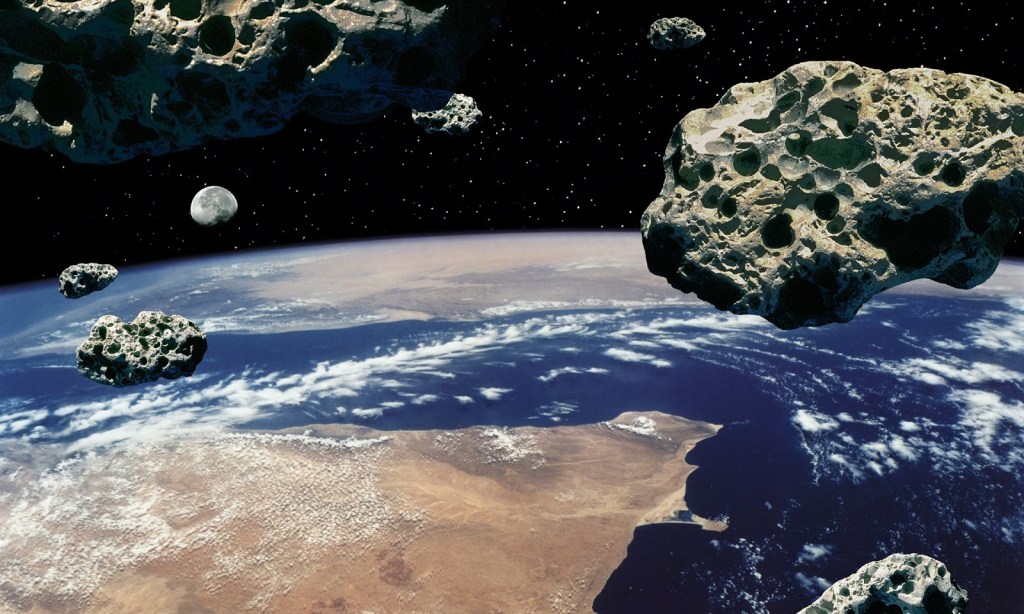
Imagine an interplanetary system that will (probably) exist in the future. Imagine the harvesting methane and nitrogen from the moons of Jupiter for shipment to Mars to alter the consistency of the atmosphere. Harvesting asteroids for water, fuel, and precious metals will be the norm, not the exception. How will economic systems work in the future?
To the victor goes the spoils.
Corporations that handle the harvesting will be at odds with governments who have alternate views of how, for example, Mars atmosphere should be constructed. Additionally, there will be one or more artificially intelligent entities acting in whatever interest they have found to be most beneficial to their creators. By definition, they will have their own motives as well. The AI will at this point have been able to learn from its environment and form its own opinions. With all these organizations working for/against each other, it will create turmoil that will settle in pseudo-equilibriums or periods of stability that are actually unstable (meta-stable). This instability will be inherent to any human created system.
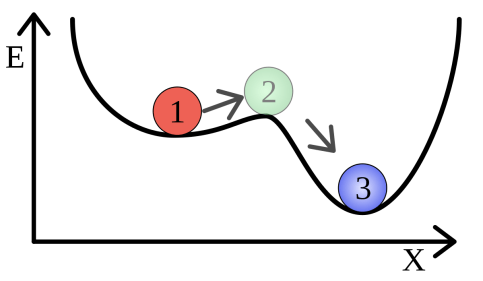
A system in which resources were divided up by an all-knowing artificial intelligence would solve the problems with inequality, but it would require us to give up certain freedoms of choice. It would ensure social mobility and more humanitarian distribution of capital. A system designed in the Keynesian model in which in times of stress, a certain amount of capital controls would be imposed to restrict the flows into bubble economies (stocks) and out of distressed economies (stocks) would be far superior to the system which exists now where capital flows are subject to human emotion. Crises could be solved faster, rather than being subject to the feedback loops described above. Bubble stocks would be less subject to melt ups and subsequent drops.
This was the purpose of the creation of the Federal Reserve following the Great Depression in the 1930’s in America. However, the system is still run by people; people with political opinions and emotions and individual agendas.
Who’s going to design such a system? Not me, that’s for sure. The problems inherent to our financial system come from discrepancies between regulation and desires. When greed or fear take over, bad things happen. People lose jobs, money, and their lives. I’m arguing for a system which is unbiased and not subject to human emotion. Should humanity realize how delicate our situation is here on mother earth perhaps a similar model could be employed in terms of greenhouse gas emissions. Controls for pricing in order to facilitate a greener economy. A system where jobs could be redistributed over shorter time intervals (culture-esque agility economics) would be better for the environment and better for the citizens. Training programs in which obsolete occupations could be redistributed and prioritized based on social standing. Imagine if we trusted such a system. We would have greater social mobility, a cleaner environment, it would replace millions of jobs. The only downside would be the hit the economy takes in the short run, while workers are being retrained and replaced.
After a period of disarray, the world would be cleaner, more agile, more resilient, and better prepared for global crises.
Thanks for reading. Vote for Andrew Yang.
/tommander-in-chief
Opinions are my own and do not reflect on my employer.
 fungible thoughts
Leave a comment