


Earnings season is upon us and a diabolical mash of market conditions is converging to make it an interesting one. Let’s get cooking.
Ingredients:
- Two tablespoons of rising stock prices
- One cup rising price to earnings ratios
- One cup falling dividend yields
- 2 cups falling earnings estimates
- A dash of slowing global growth
- One scoop of Quantitative Easing
- Pinch of hoarding in the UK (optional)
Directions:
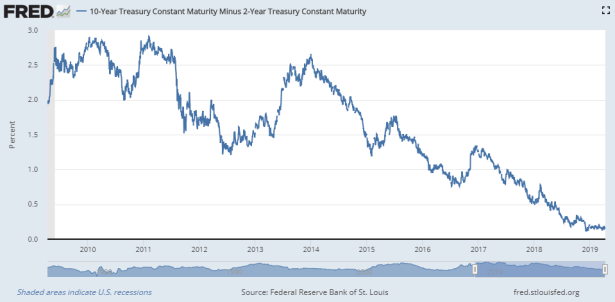
Preheat economy to all-time low-interest rate spreads.
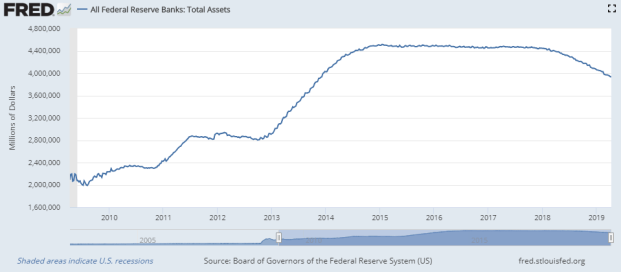
Add QE for extra financial asset appreciation:
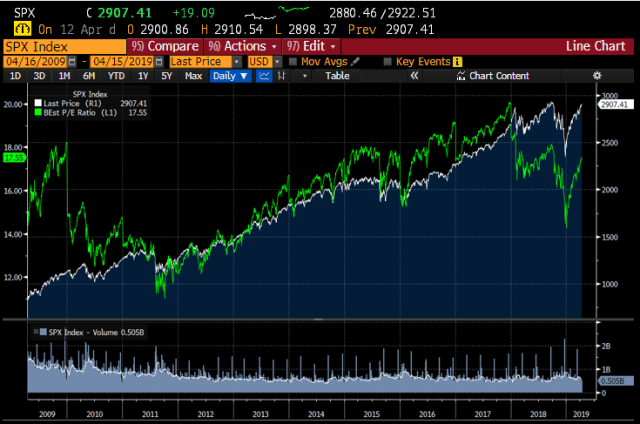
Mix stock prices and price to earnings ratios and let rise for 10 years.
Add earnings estimates and dividend yields; place in freezer to cool for 3 months.
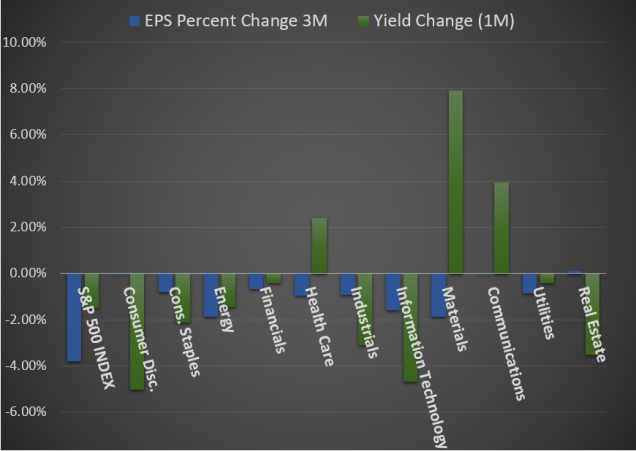
Note: These are the S&P 500 Index sectors (only large-caps).
Not all sectors are cooling; looks like real estate is still growing earnings despite global growth slowing, which seems backward. Dividends in health care, materials, and communications are rising, despite lower earnings estimates… hmm…
While stirring, slowly add in declining global growth until the IMF makes a statement.
From WSJ.com:
The International Monetary Fund in April cut its outlook for global growth in 2019 to 3.3% from estimates of 3.5% in January and 3.7% in October, warning that trade tensions and declining business confidence were weighing on nearly all countries around the world. The IMF isn’t alone. The Fed and European Central Bank have also trimmed growth forecasts in recent months. And in China, officials have ramped up spending and cut taxes to try to boost a slowing economy.
For flavor, one can add hoarding of assets in the UK in anticipation of Brexit:
IHSMarkit.com had this to say about the UK economy:
UK manufacturing reported a surge in production and stock-building in March as companies prepared for Brexit, but also indicated a further switching of supply chains out of the UK by European customers.
While the manufacturing upturn may temporarily lift economic growth in the first quarter, longer term downside risks have increased: the temporary boost will likely move into reverse and EU supply chains could continue to divert away from the UK, depending of course on the Brexit developments in coming months.
If you’d like icing on your Market Crash, allow volumes on major broad indices to stagnate.
The WSJ had this to say, today (April 15):
Trading volumes have fallen as major indexes climb toward all-time highs, the latest sign that investors remain cautious despite 2019’s powerful stock rebound…
Low trading volumes worry some market watchers because analysts say they can exacerbate market swings in both directions if momentum changes, leading to outsize gyrations.
Some analysts say the placid trading activity also highlights unease as first-quarter reporting season picks up in earnest. S&P 500 companies are expected to post their first drop in quarterly earnings in nearly three years, and some investors are waiting to see what happens to corporate profits as the effect of tax cuts passed in 2017 fades.
For best results, let sit for one to three months.
In all seriousness, this earnings season should give some insight into how companies view the coming year. We will see some revised earnings guidance. We will get some volatility in big names. Should be fun. Get your popcorn ready.
Thanks for reading,
/tommander-in-chief
 fungible thoughts
Leave a comment