

Thoughts of a Liberal Arts Graduate on the Fed, interest rates, inflation, demographics, and more
The entire point of low interest rates was to shift consumers up the risk ladder. Lower potential returns in lower risk baskets purposefully pushed investors toward riskier options; pushed them to take more risk, for the same reward. The Fed pushed short term interest rates lower (by use of the fed funds rate), began purchasing longer term treasuries (10-year+) to take away the incentive to invest even at that risk level, and even began issuing longer term guidance since 2008 to encourage taking longer term bets.
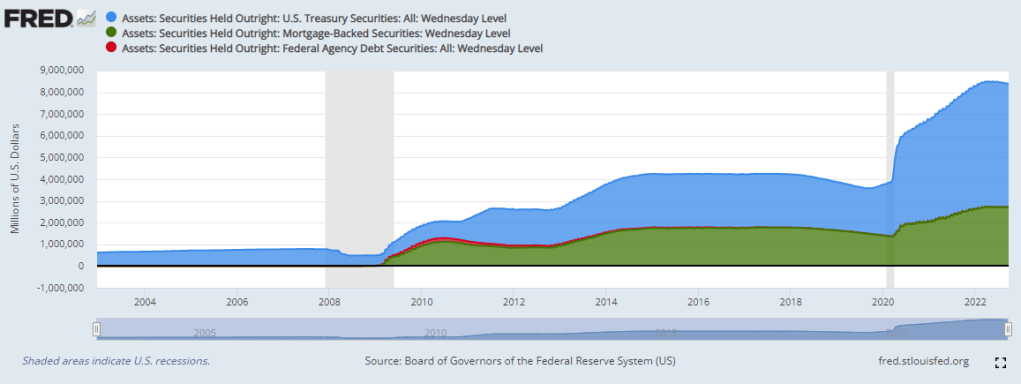
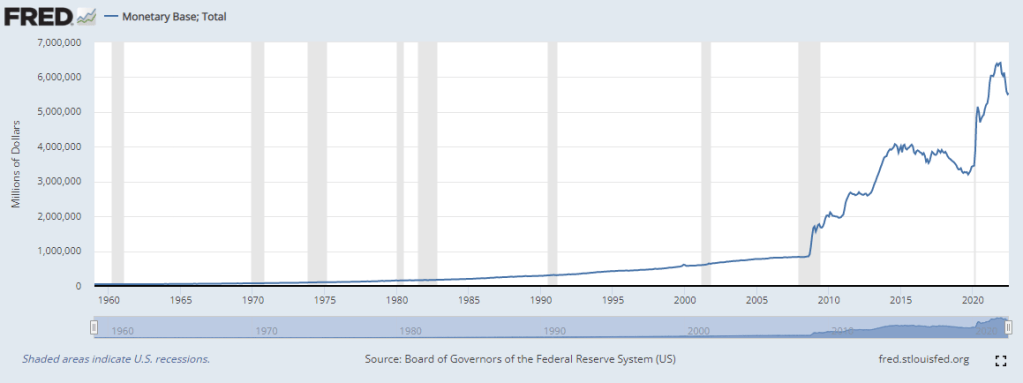
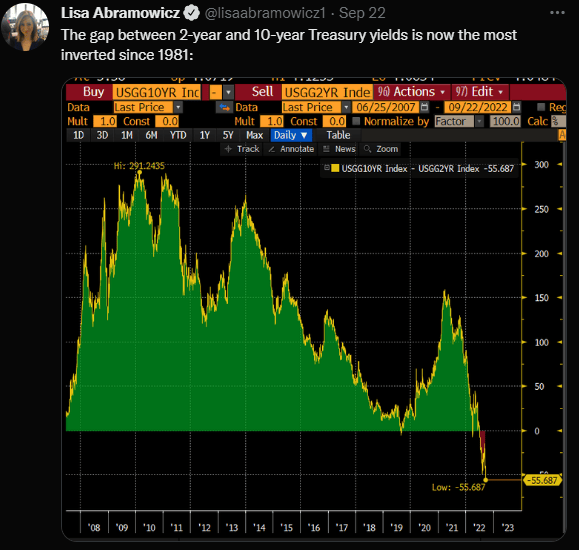
When the pandemic hit, the Fed began buying up US Treasurys and mortgage backed securities at an insane clip (about $80B and $40B per month, respectively, from March 2020 to March 2022). Over this period, Fed assets rose from about 18% of GDP to 35%. Since June 2022, the Fed has begun to unwind those positions at a clip which rose to $35B per month in September, while simultaneously raising short term interest rates though the Fed Funds Rate. Long(ish) term expectations of where the Fed Funds rate will be in several years is around 5.75%. That’s a “risk-free” rate. Imagine where your 30-year mortgage rate will be in 5 years…
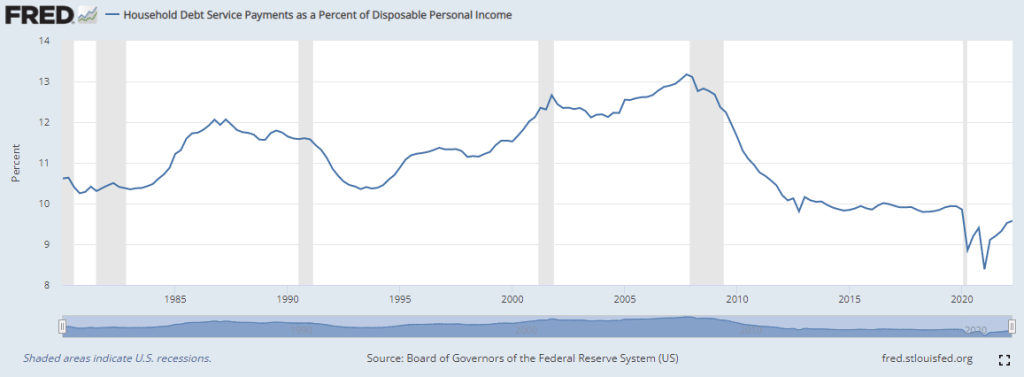
Everyone the Fed pushed up the risk ladder is still holding or currently unloading these assets. As rates rise, money will begin to move back down the ladder. The elevated levels of riskier assets will and should come down to more “normal” levels.
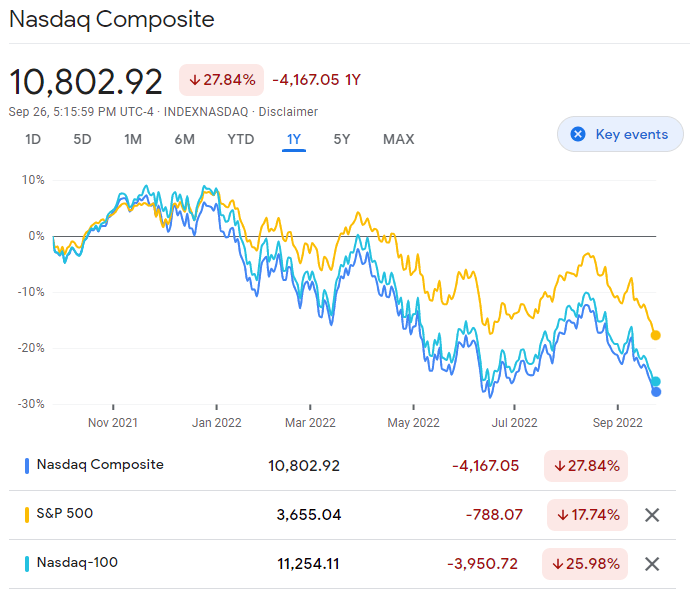
With all these “unprecedented” moves, the talking heads are telling you a recession is coming; that economic models are predicting a downturn in this or that asset class. In order to properly predict how an economy as complex and vast as the modern global system will react to such fluctuations, we would need to accurately predict how consumers and produces would react in complex situations. More often than not, consumers will behave differently in the same situation.
It’s nearly impossible to forecast how consumers will shoulder the following set of variables without considering an incredibly broad set of variables. Often, expectations can drive outcomes rather than the outcome being inevitable; with the data and modelling in the driver seat rather than the behavior, creating a self fulfilling prophesy of sorts. The narrative creates reality, not the other way around.
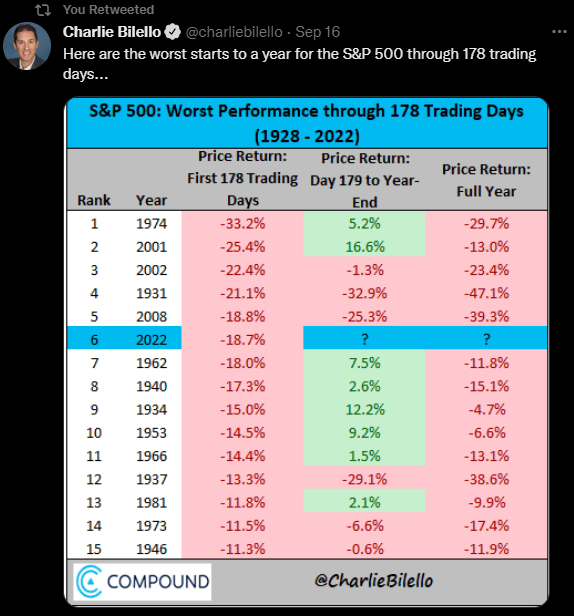
For example, watch where expectations and forecasts of the S&P 500 index during a bull (rising) market vs. a bear (falling) market. If the S&P is currently in a rising regime, we’ll have a consensus forecast above the current level and vice versa, despite statistical models consistently telling us that past data is not a predictor of future price behavior.

Definition of the variables:
- Stronger dollar
- Rising interest rates globally
- Higher energy prices
- Rising wages & rising inflation
- Demographics (birth rates, aging, family forming dynamics, etc)
- Low unemployment, but negative GDP growth
- Rising frequency of ecological disasters (inland lake covering much of the middle-east; drought in Europe, US; falling biodiversity; climate change, etc.)
- More need for humanitarian aid, rising geopolitical risk (Russia-Ukraine)
- Political shift toward nationalistic policies
Forming an investment thesis under any regime consists of forming a narrative by combing interacting variables in the most logical manner possible. Recall that consumers as a whole, given perfect information (which they never have) and freedom to interact (which is geopolitically doubtful) will find the optimal solution as required by the “laws” of free-market capitalism. We’ll try to put together a narrative below, as an example. Similar to a the liberal arts education thesis, this is not to teach you what’s right and wrong, but how one can think through a complex system to come to reasonable conclusions. We’ll start at the top of the list and work our way down.
There are two kinds of forecasters: those who don’t know, and those who don’t know they don’t know.
John Kenneth Galbraith
A stronger dollar points to a demand for safety assets. US Treasurys are generally considered the safest asset class in the world, and rates on these government debt instruments are rising. As stated above, rising interest rates on safter assets pushes investors away from riskier assets as the return profile of safer assets changes. All this feeds the stronger dollar narrative.
A strong dollar increases the purchasing power of wage earners and asset holders in US dollar governed countries. Countries with high inflation and a weakening currency can see their import costs increase dramatically, furthering the need for significant government intervention in import/export markets, especially if said country is an energy importer.
Side note: within the category of US dollar denominated asset holders, there is a massive gap between the haves and have-nots. The last 14 or so years we’ve been in a bull market in both equities and fixed income, bolstering the portfolios of those who could afford to take more risk for less reward. The Fed, although perhaps not purposefully, has poured gasoline on an already spiraling wealth gap.
To gauge how a category of goods will perform in current and near future market conditions requires analyzing not only where a finished good is produced, where it’s consumed, and purchasing terms but also these variables for the inputs to producing this good. Some goods are traded in public, lit markets, for example orange juice, coffee, and wheat, but others are not, for example, semiconductors, software, and underwear.
A vast swath of information is employed in calculating the “marginal propensity to consume” (economist speak for where a consumer would deploy additional income). The Fed can try to get more or less consumers to take on debt, but they can only influence from afar. The effects have to trickle down through the economy, through banks, insurance companies, big box stores and bodegas.
Changing veins to a more long term perspective, demographics dictate where future growth is likely to occur. Nationalistic policies becoming more popular in countries with an aging population is a strange dichotomy, while the same political ideas make sense in a country with “labor power”. Protecting what’s “mine” points to a less open global economy, which is strange given an aging society’s dependence on outside labor and goods.
Globalization dictates where goods will be produced, at the lowest cost to quality ratio. Highly sophisticated non-standardized goods will continue to be developed in the highest wage countries, while the standardized, high-volume, high-demand goods will continue to be outsourced to the lowest wage to quality countries. Countries with younger workers will outperform their peers when being asked to mass produce standardized goods.
When a country has both younger workers, high worker participation rates, and a low density of high paying jobs, it’s to be expected that globalization will eventually move in and take advantage of the economics; that is, unless the country’s currency is not the dollar, they are an energy importer, inflation is out of control, nationalistic policies push the price of export toward parity, they’ve just been struck by a 1000 year flood, and their leader is a hot-headed unpredictable dictator.
In this context it makes sense to analyze where the labor power is, what that country’s global clout is on import/export markets, level of currency & debt risks, interest rate disparity, and frequency and risk of ecological disasters to determine the future leaders of the world; not to mention military and civilian weapons capabilities especially if the regime of the US as a global police force is instead traded in for a nationalistic political sentiment.
I’d recommend reading Peter Zeihan’s newest novel The End of the World is Just the Beginning for further analysis of where we are today from a geopolitical demographics perspective.
I hope you got something out of all this. It’s not an investment recommendation, but advice on how to think through the problem when assaulted with economic information.
Thanks for reading,
/Tommander-in-chief
Read this. Just read it: Outside Online
Bonus:
 fungible thoughts
Leave a comment