
A smattering of thoughts: layoffs, AI bubble, Trump policy, crypto, Fed repo actions, fraud.
Structural changes to US economy -> labor for infrastructure
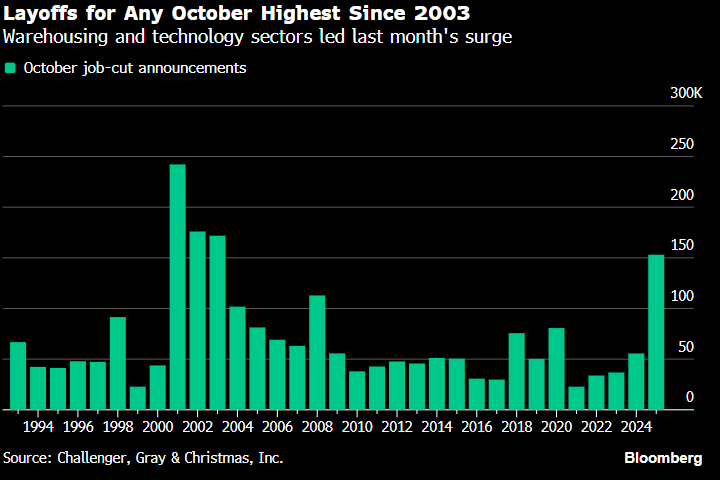
Verizon is the latest in a swath of tech companies laying off corporate staff, announcing it’s cutting up to 20% of it’s workforce.
In recent weeks, Target Corp. announced plans to eliminate 1,800 roles, or about 8% of corporate jobs in its first major restructuring in years. Amazon.com Inc. said it would slash 14,000 corporate jobs — following a warning from its CEO that AI will shrink the company’s workforce — while Paramount Skydance Corp. axed 1,000 workers. Other companies cutting corporate jobs include Starbucks Corp., Delta Air Lines Inc., CarMax Inc., Rivian Automotive Inc. and Molson Coors Beverage Co., which cut about 9% of its salaried workforce.
This feels different than a recession. It feels more like a restructuring move, especially by the top brass of AI believers. We might actually be getting more automation of low level admin tasks out of AI, if not we’ll have less workers doing the same amount of work. Puts pressure on management from bottom up to actually implement automation. By chopping corporate jobs and boosting AI investment, companies are shifting their assets from human capital to infrastructure. We’ve all heard that AI is going to take our jobs and it’s finally here. These jobs aren’t coming back. This isn’t a recession layoff, this is a bottom line investment restructuring.
Human capital will need to reinvent itself or physically move themselves to where work is. The Trump plan involves a manufacturing revival. If it’s government subsidized, sure. We can then compete on cost, but otherwise it’ll have to be manufacturing for the 1%. They’re the only ones who can afford to pay the higher costs. If it’s the same quality good for a higher cost, that’s just basic economics that the lower cost goods win out.
Globalism is the case for more trade across the planet. It makes our world safer by making wars more expensive. A protectionist state isolating itself from the global market makes everyone worse off. Especially in terms of labor cost.
On one hand we’re restructruing the economy to fit the AI narrative and implement more automation of admin tasks while on the other we’re eliminating cheap labor by deporting it through the Dept of Homeland Security. Office laborers will be forced to up-skill into more specialized jobs, which often have hefty experience requirements, or down-skill into manual labor-esque tasks.
Interesting times for an economist, but terrible if you’re the average US worker. This all goes without mentioning massive levels of income inequality. A trillion dollar pay package for the world’s richest man…
Looks like a bubble, quacks like a bubble…
AI valuations -> forward earnings vs realistic expectations
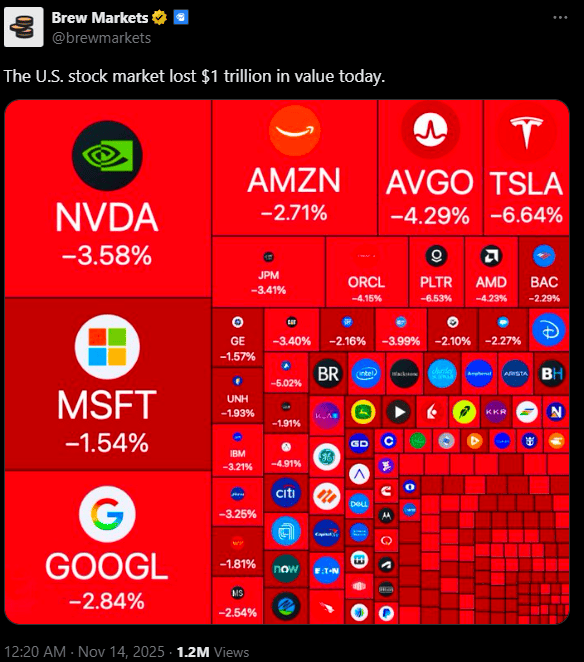
Nvidia reports earnings next week. Remember that things don’t have to go from good to bad for markets to fall. Stellar is the word I’d use to describe Nvidia’s recent performance. If the company’s earnings show any signs of slowing, a drop from stellar to great could be catastrophic for the entire market, which is betting heavily on AI valuation supremacy. If it looks like a bubble and quacks like a bubble, it might be a bubble.
That said, let’s have a look at forward earnings estimates and market prices for the top AI companies globally.
Price to earnings is a ratio measuring the market price of a company relative to it’s profitability. Bang for your buck. How much earnings am I getting to buy this stock. You can also conceptualize this way: a company’s PE is the number of years it will take to receive, in earnings, what you paid for the stock. A PE of 20 implies that after 20 years, you’ll have received the price you paid for the stock in earnings.
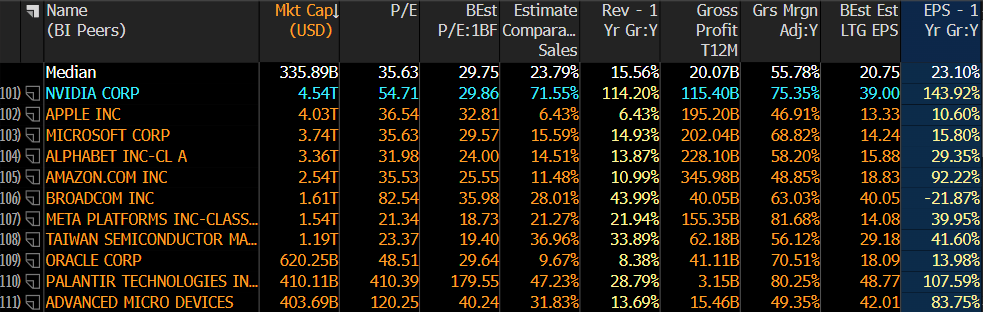
Have a look at the BEst P/E column versus the P/E column. PE is the trailing ratio, which means it’s comparing price today versus the earnings in the trailing 1 year. As we know, stocks trade relative to their expectations as well as being anchored to their past behavior.
Nvidia, for example, is trading at 54.7x past earnings, but “only” 29.9x forward earnings. 30-ish doesn’t seem too extravagant given their gross margins are so high, at 75%. Of every dollar of revenue generated by Nvidia, $0.75 of that is being booked directly as profit. They’re printing money, insane business. The kicker is foward earnings estimates. Check past revenue growth (“Rev -1 Yr Gr” column above) relative to estimated sales growth (“Estimate Compara… Sales” column above). Nvidia shows signs of slowing (114% vs 71% expected), while market “peers” estimates are more steady with past looking figures with some exceptions of coures. Peers here are defined as large companies who have tied their success to AI supremacy.
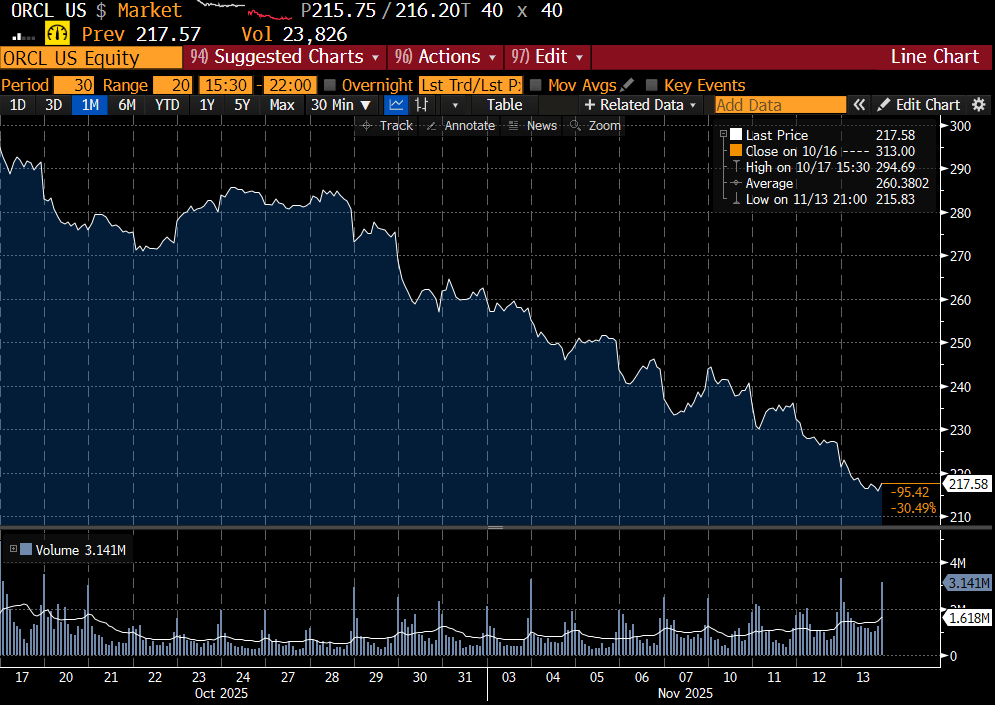
Oracle stock is in hot water, off about 30% over the past month as it deals with AI growing pains. Lower price means lower price to earnings means more reasonable valuations. If you liked it at 100, you’re going to love it at 70.
Zoom out a bit and maybe things aren’t so bad over there at ORCL. Returning nearly 50% annually since late ’22? Don’t let the man get you down.
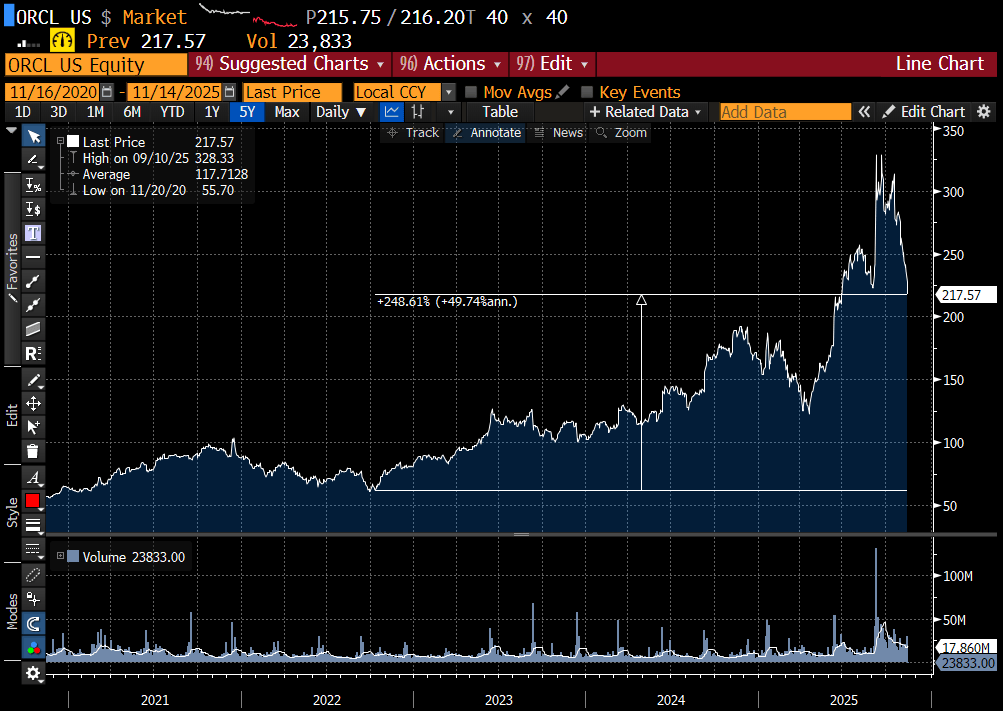
So are we in a bubble? Maybe overly optimistic sales targets, as we can’t keep this up forever. We’ll eventually need to slow down as we can’t grow at 100% per year in perpetuity. “Double it and give it to the next person.”
Trump’s Market Policy ->
When the policy is the market, the market becomes policy.
The Trump administration’s tariff policy gives them another tool to fight market routs. As Trump’s attempts to control the Fed have thus far failed, he needs to turn to other tools to prop up markets. So he created them. He can remove or lessen tariffs at any moment which will satisfy short term investors and boost markets.
He can control the business cycle by asking companies like Nvidia to announce another 500B USD investment. He can subsidize these businesses by having the treasury purchase their debt. He’s got tools, so if/when the bubble starts to leak he’ll put these measures in place.
The market is the policy and policy is the market. Michael Burry, the famous investor who shorted the housing market in ’08, closed his hedge fund stating something to the tune of, “I don’t understand this market anymore.” Traditional, academic financial education has no clue how to value these markets.
By refusing to allow markets to fall, we need to come up with new ways for new buyers to enter the market. Enter the 50 year mortgage. In Sweden, the 50 year mortgage is the standard not the exception. We deduct our mortgage interest payments from our yearly tax bill. We don’t have to pay down principle on our mortgages after we hit a certain equity percentage.
All these policies were band-aid style fixes for a structural problem. They’ve succeeded in getting past generations into the housing markets by implementing one time fixes which subsequently sent housing prices much higher, faster.
Don’t underestimate policy-makers’ ability to financial engineer their way out of never crashing the markets. Barring WWIII or any other catastrophic black-swan, I’m not sure we’ll ever see another prolonged market crash. The pandemic was a major global crisis and peak to peak in that market was only about 6 months. “Liberation day” was also only about 6 months from peak to peak.
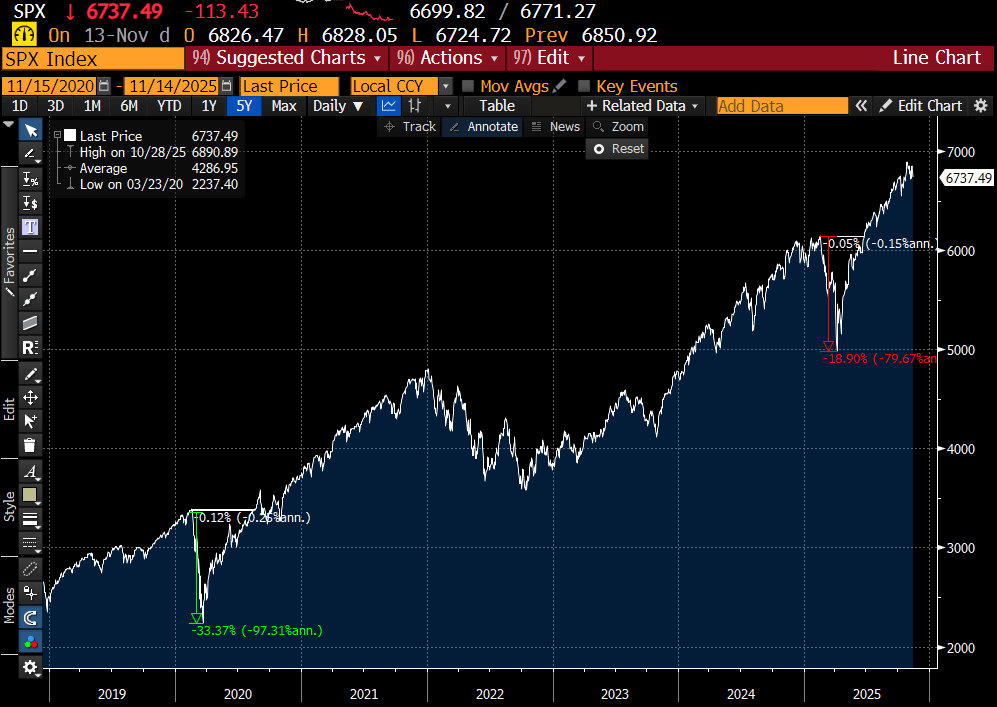
Crypto’s getting smoked recently too. USDBTC down below 97,000 USD. Crypto can be thought of as a gauge of speculation interest. When crypto falls, it can be seen as the thermometer for how much specuation buying is happening in markets. There are some major structural milestones ahead for BTC and crypto more broadly. More on that in a coming post.
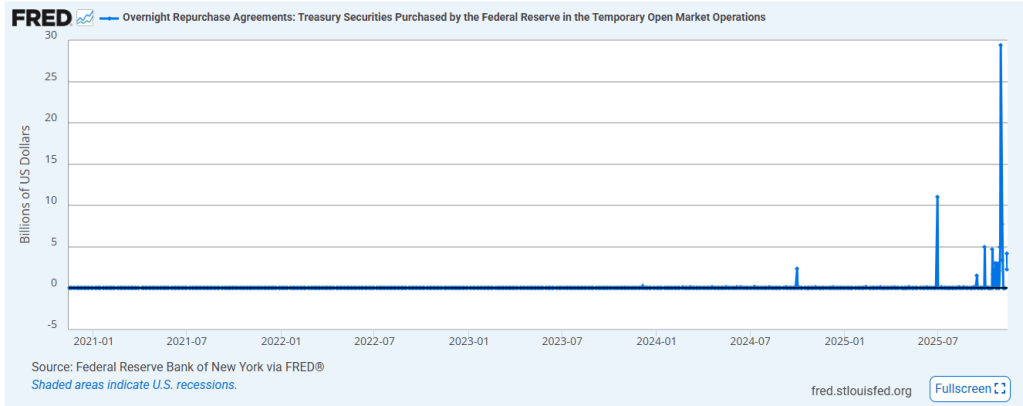
The Fed is quietly injecting funds into the stressed banking system. Overnight repos allow banks to sell treasuries (bonds) to the Fed for cash. This ensure that than banking system continues to function. Greasing the wheels of debt markets, in other words. As the Fed continues to talk tough on inflation, they’re simultaneously easing market conditions through purchasing treasuries, injecting cash into the system. Tight monetary policy, loose monetary action. The last time the Fed did this level of repo repurchasing was during the pandemic. You could almost call it a quiet bailout of the most stressed banks. Read this.
Fraud is on the rise.
Charles Moore also testified that within weeks of arriving at First Brands, he uncovered evidence of massive financial fraud at the auto-parts company, from fake invoices to using the same assets to win loans from different lenders, a process known as double pledging collateral.
He also stole millions from the company. Tricolor also caused some credit market ripples.
The collapse of Tricolor and another debt-laden company, First Brands Group, led to tremors in the US credit market, with investors dumping risky debt and Jamie Dimon warning of more ‘cockroaches’ in their portfolios.
As always, do your own research. Overall I’m bullish, but look out for cockroaches. Where there’s one, there’s always more.
/Tommander-in-chief
fungiblethoughts@gmail.com if you want to chat. Or find me on LinkedIn.
 fungible thoughts
Leave a comment